
Kourou.
Kourou, 2002–2004: Doo Interactive documented Stentor, Rosetta and Ariane 5 for CNES, then explained a full launch campaign on CD-ROM.
Documenting Europe's spaceport
Two satellites, one launcher, and a launch campaign explained.
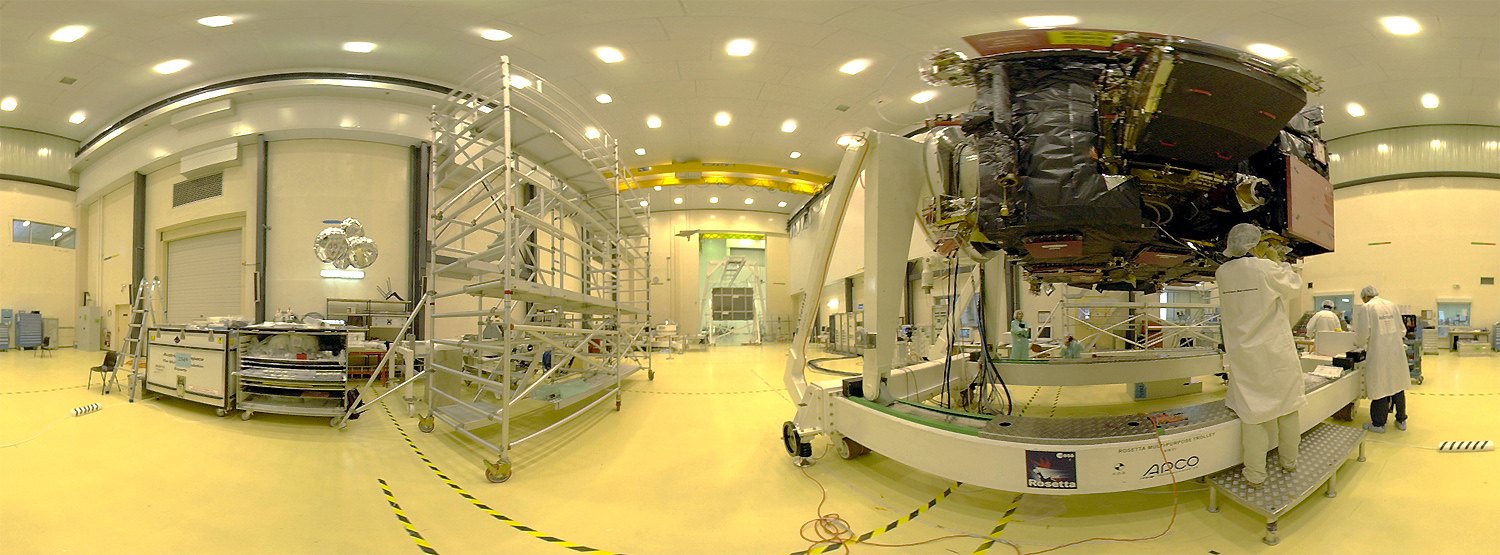
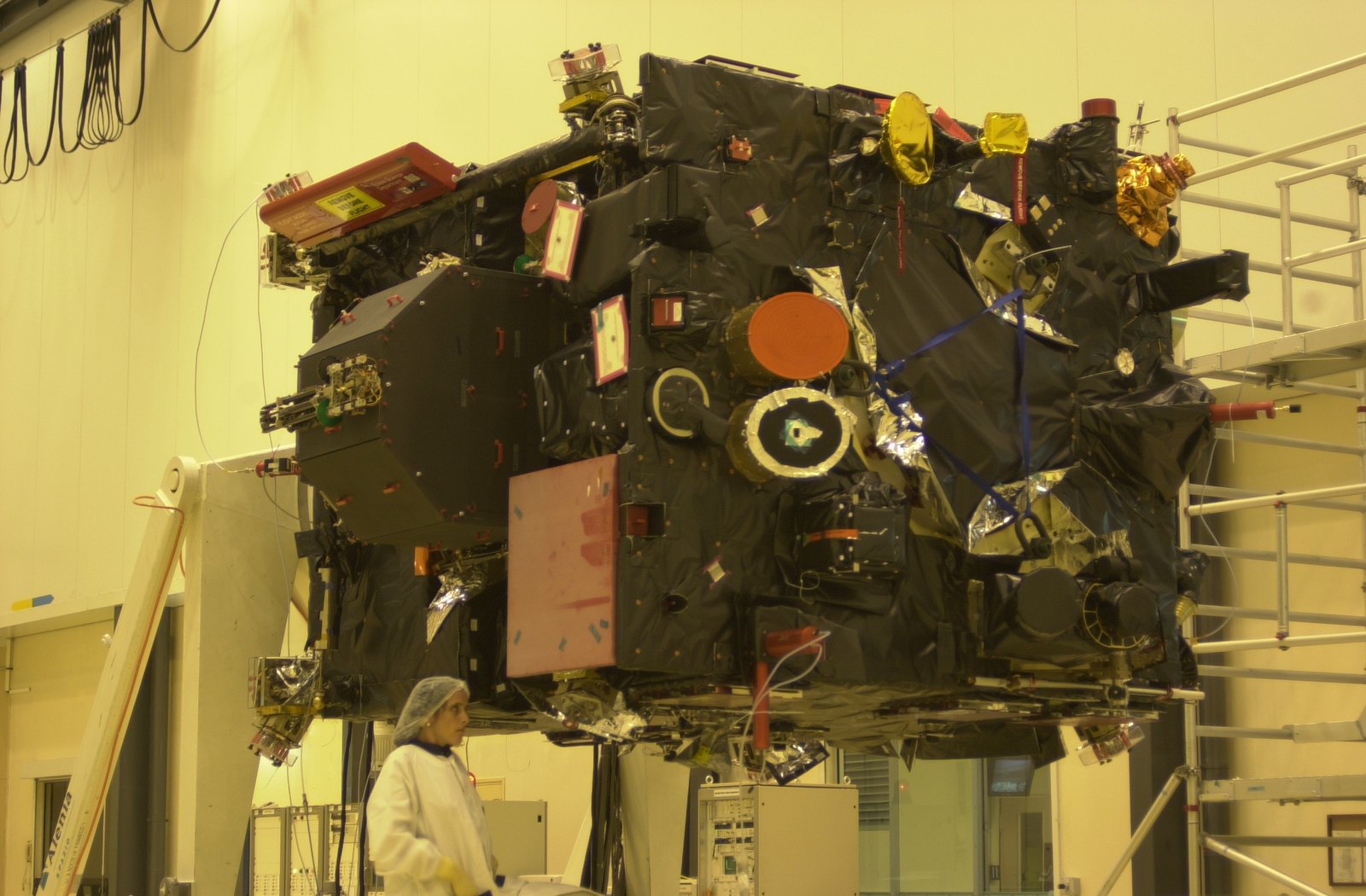
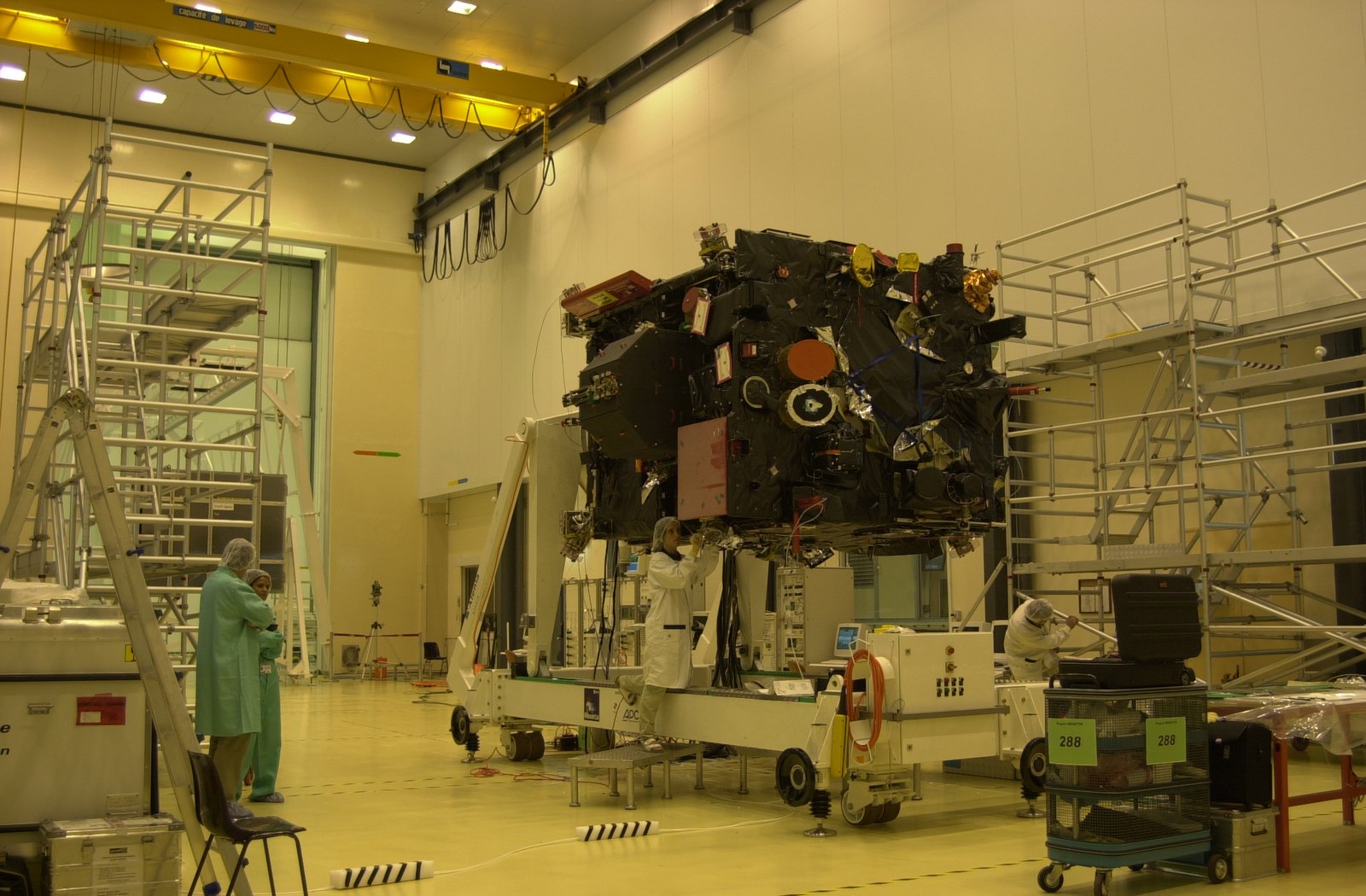
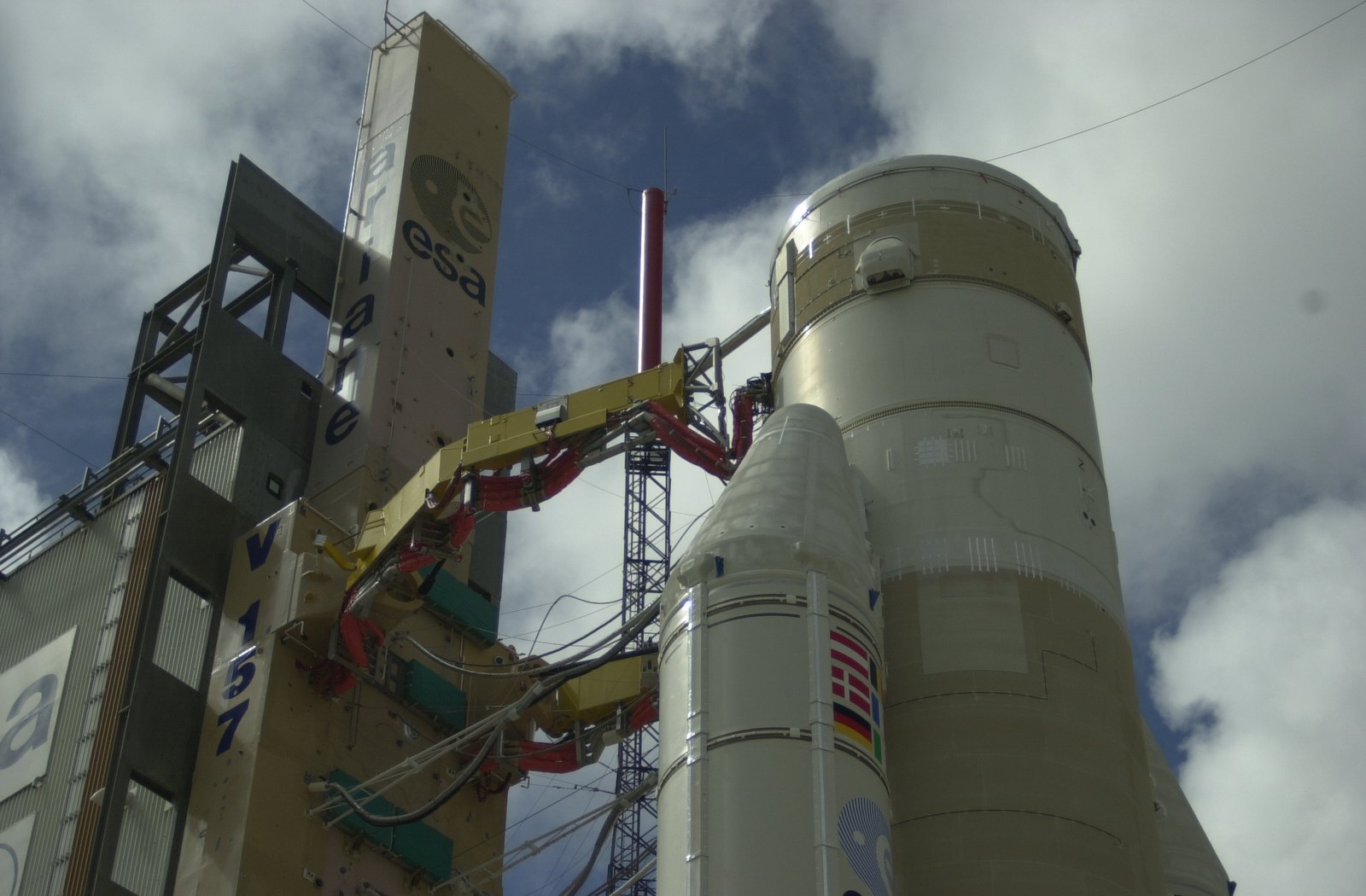
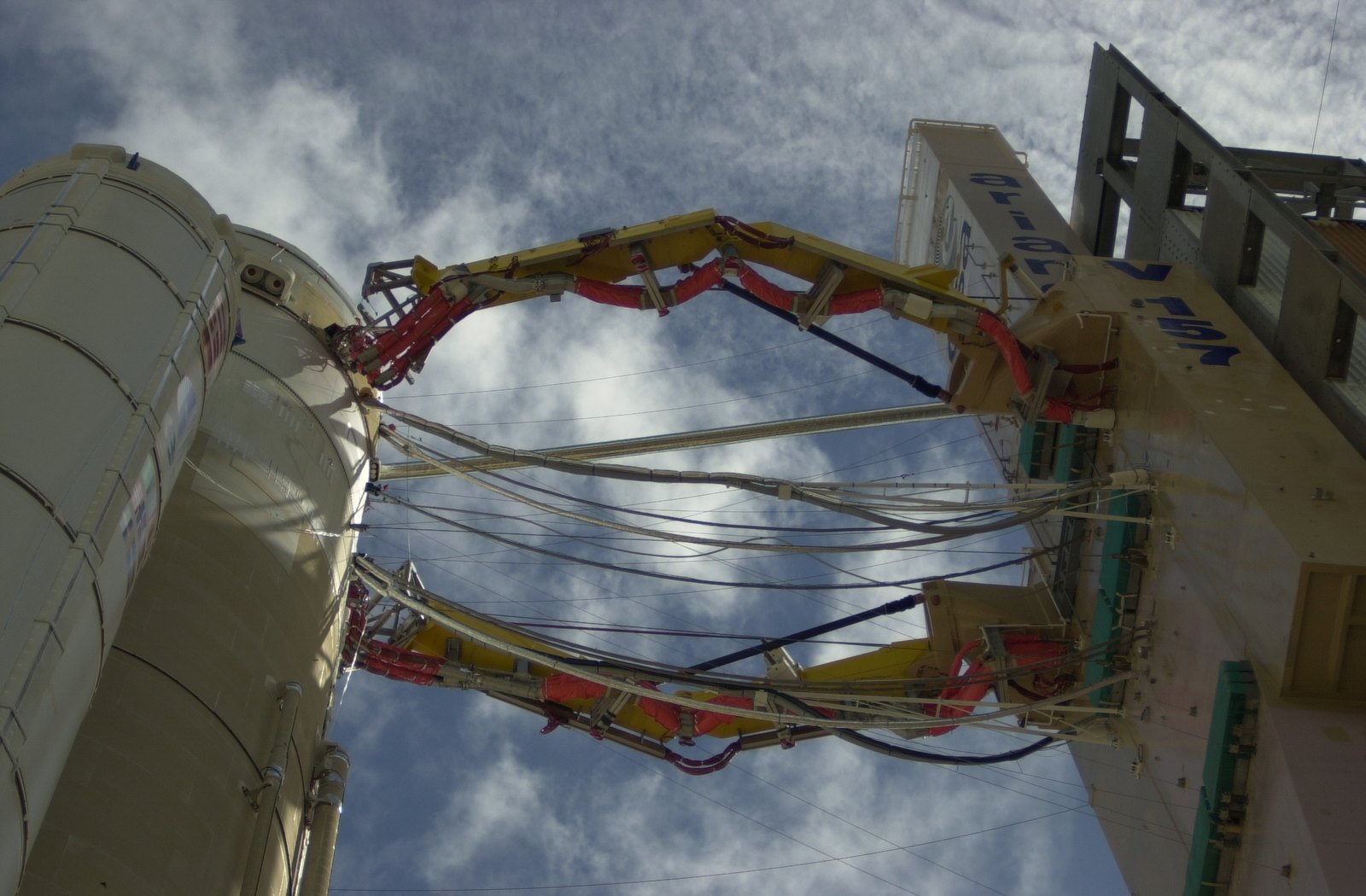
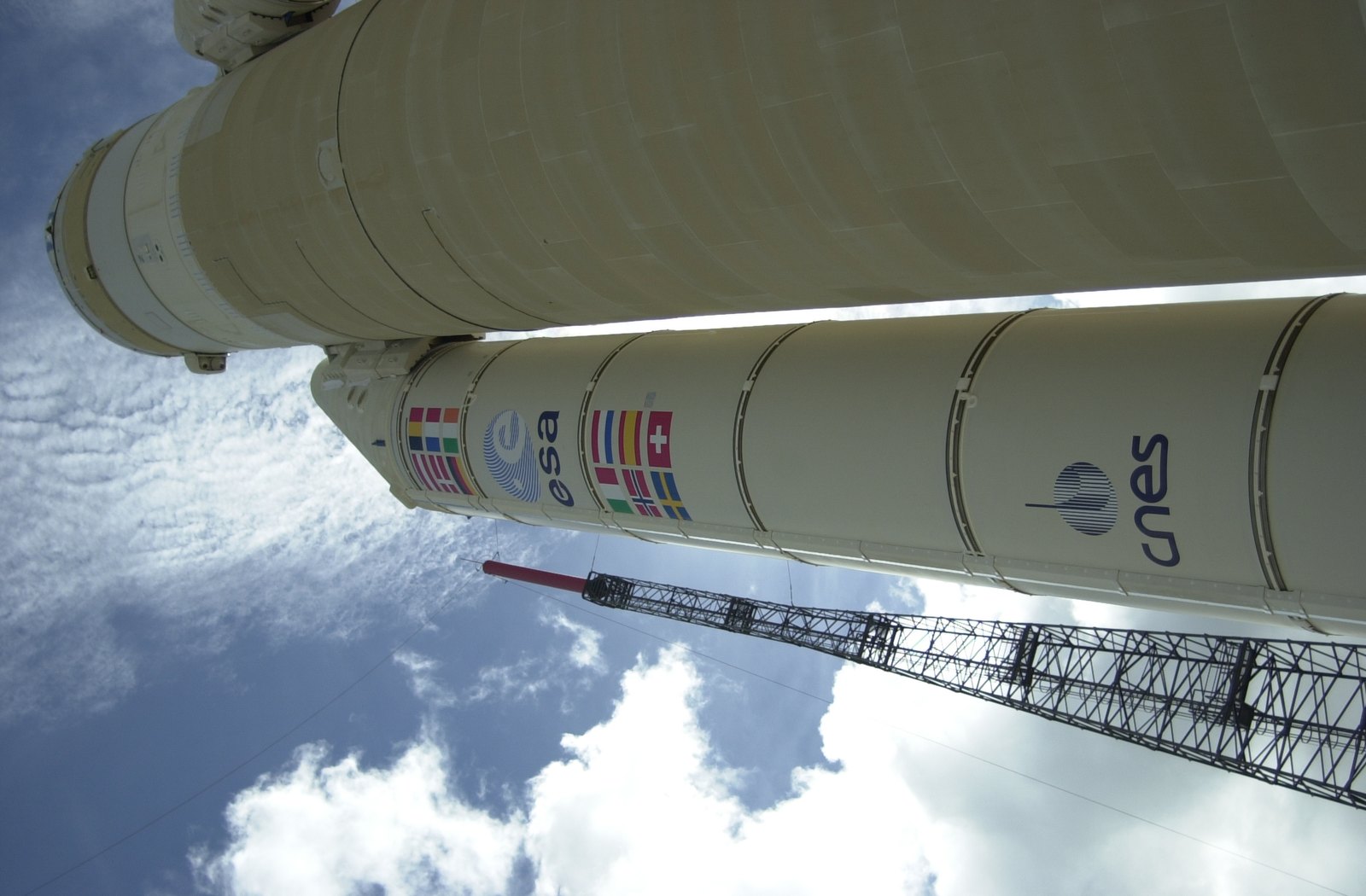
In October 2002 CNES, the French space agency, commissioned Doo Interactive to document spacecraft and launch facilities at the Guiana Space Centre in Kourou: the experimental satellite Stentor and ESA’s comet probe Rosetta in their clean rooms, and an Ariane 5 at its launch pad, in 360° views and photographs.
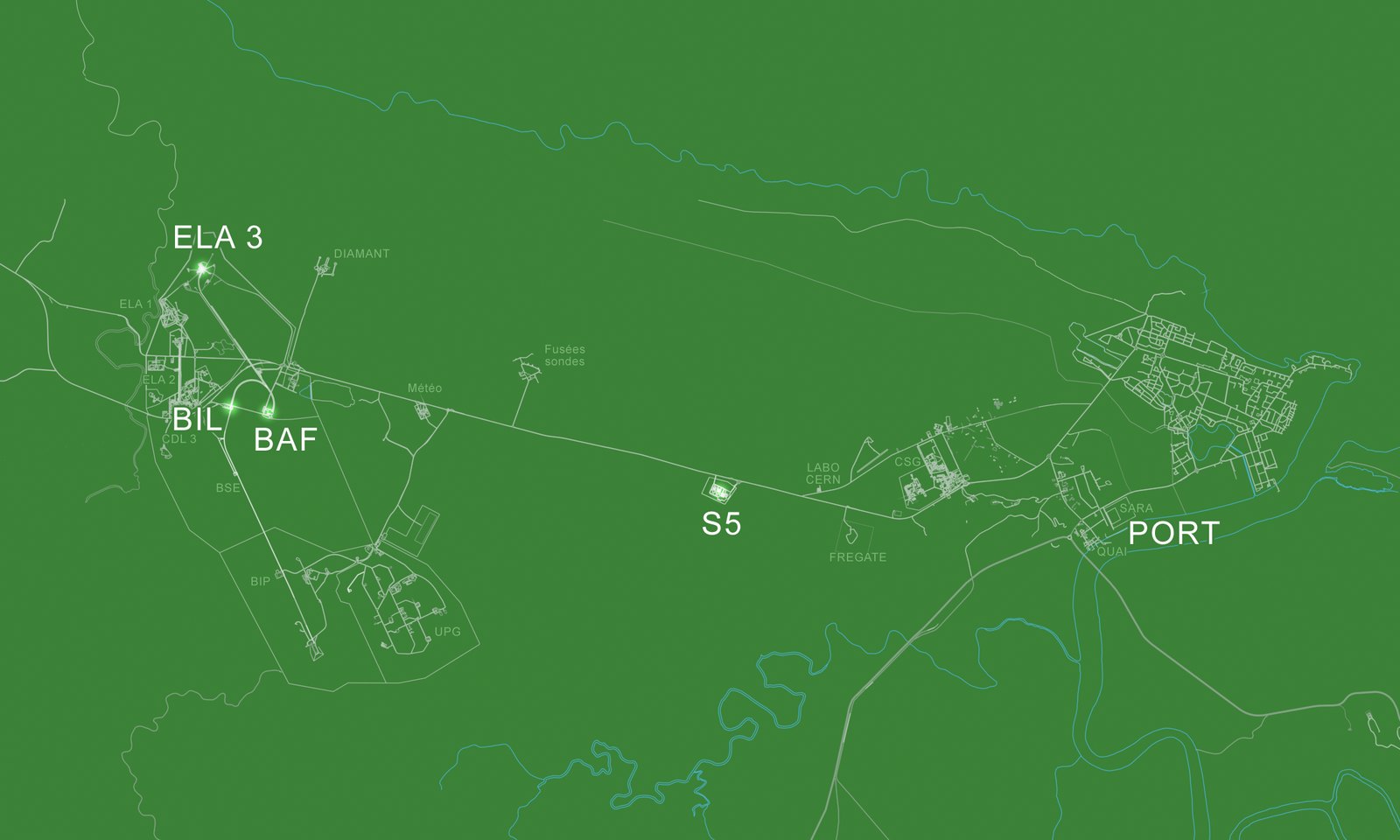
In 2004 CNES returned to Doo Interactive for an interactive CD-ROM that explained a complete launch campaign, from the arrival of the rocket stages by sea to lift-off, built on a map of the base and 360° views of its buildings.
Five degrees from the equator
Kourou sits about 500 km north of the equator. The Earth’s rotation is fastest there, which gives a rocket a free boost towards geostationary orbit, and the open Atlantic to the east takes anything that falls back. France chose the site in 1964; the first launch followed in 1968. Today CNES runs the base, the European Space Agency owns the launch facilities and Arianespace operates the launches.
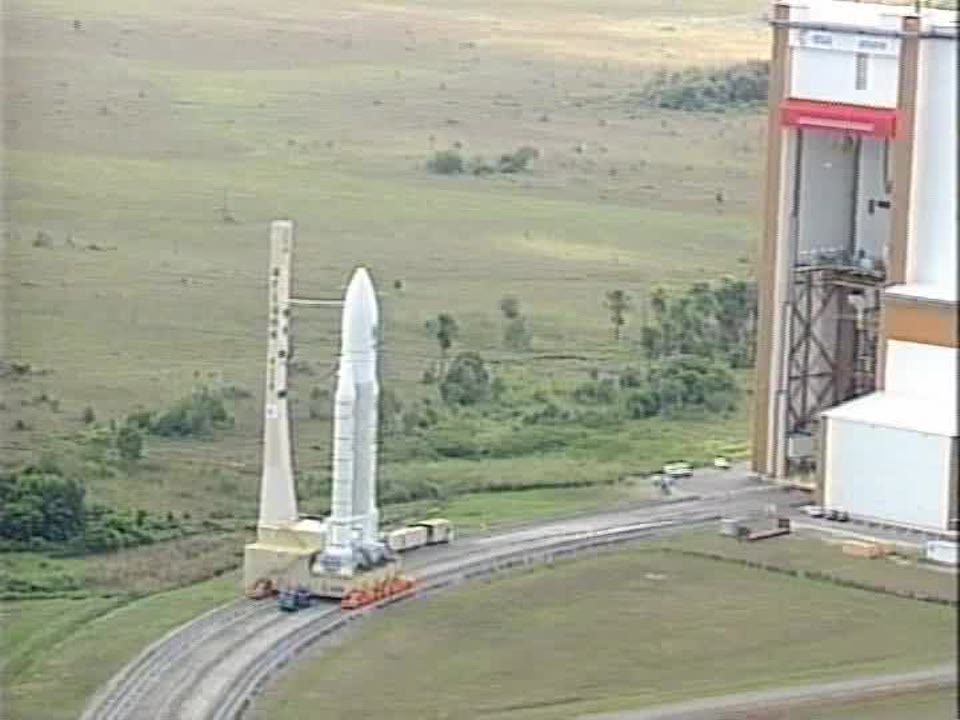
Ariane 5 flew from its dedicated complex, ELA-3, from 1996 to 2023. A launch is a chain of buildings: stages assembled in the launcher integration building (BIL), satellites prepared in clean rooms such as S5, payload and launcher joined in the final assembly building (BAF), then roll-out to the pad while the Jupiter control room runs the countdown.
north of the equator
first launch from Kourou
Ariane 5 from ELA-3
Two spacecraft weeks from launch
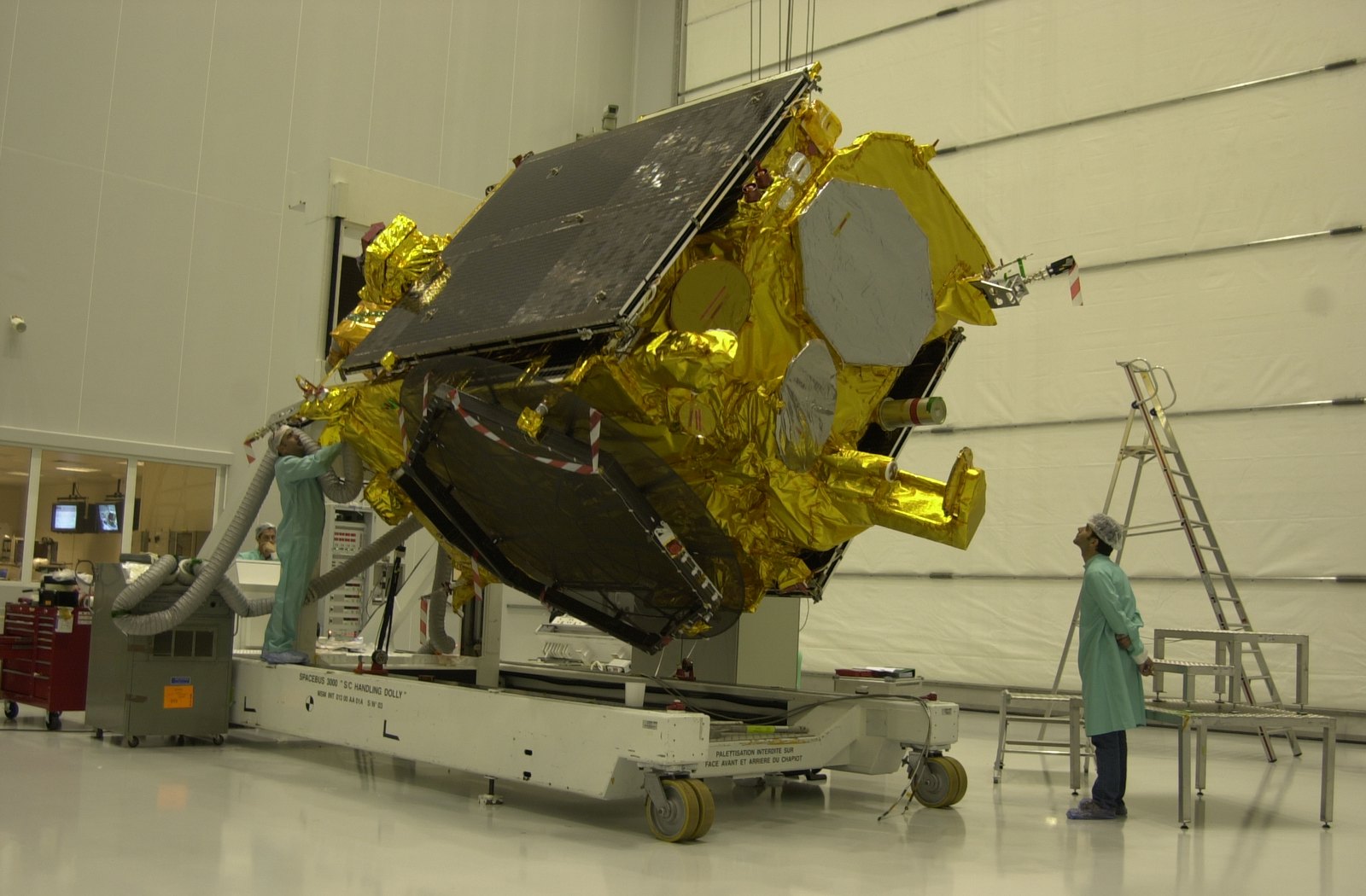
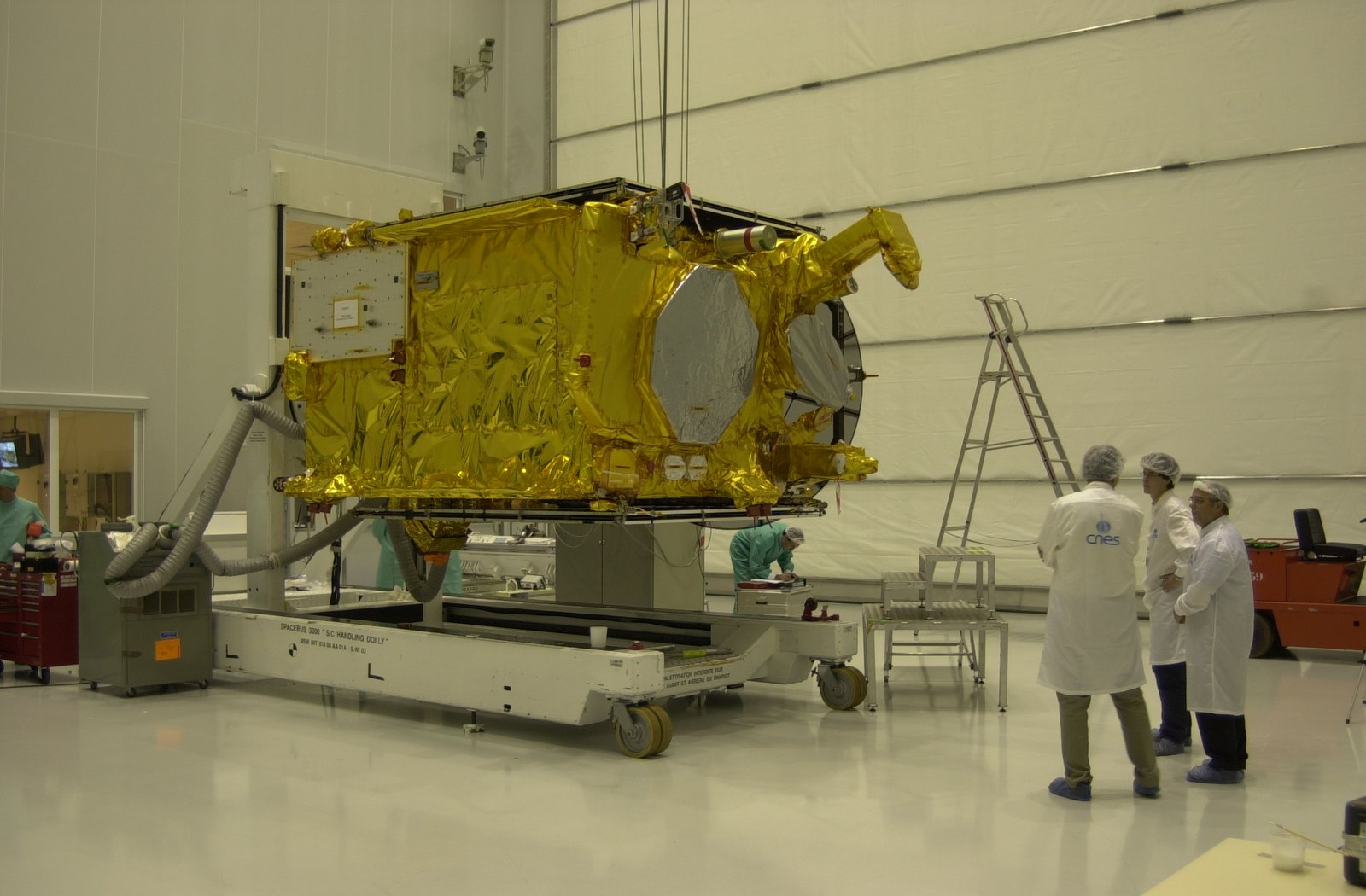
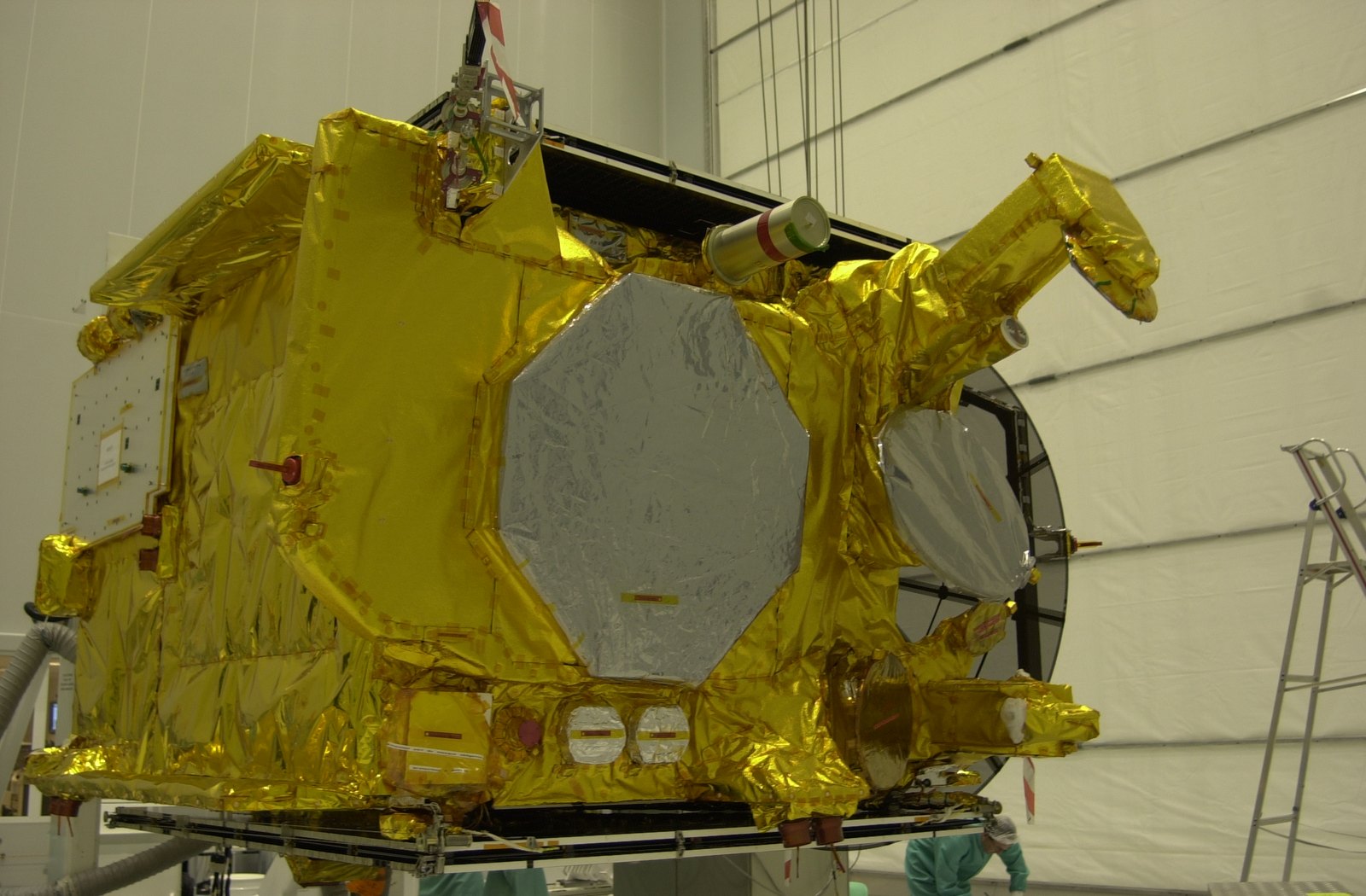
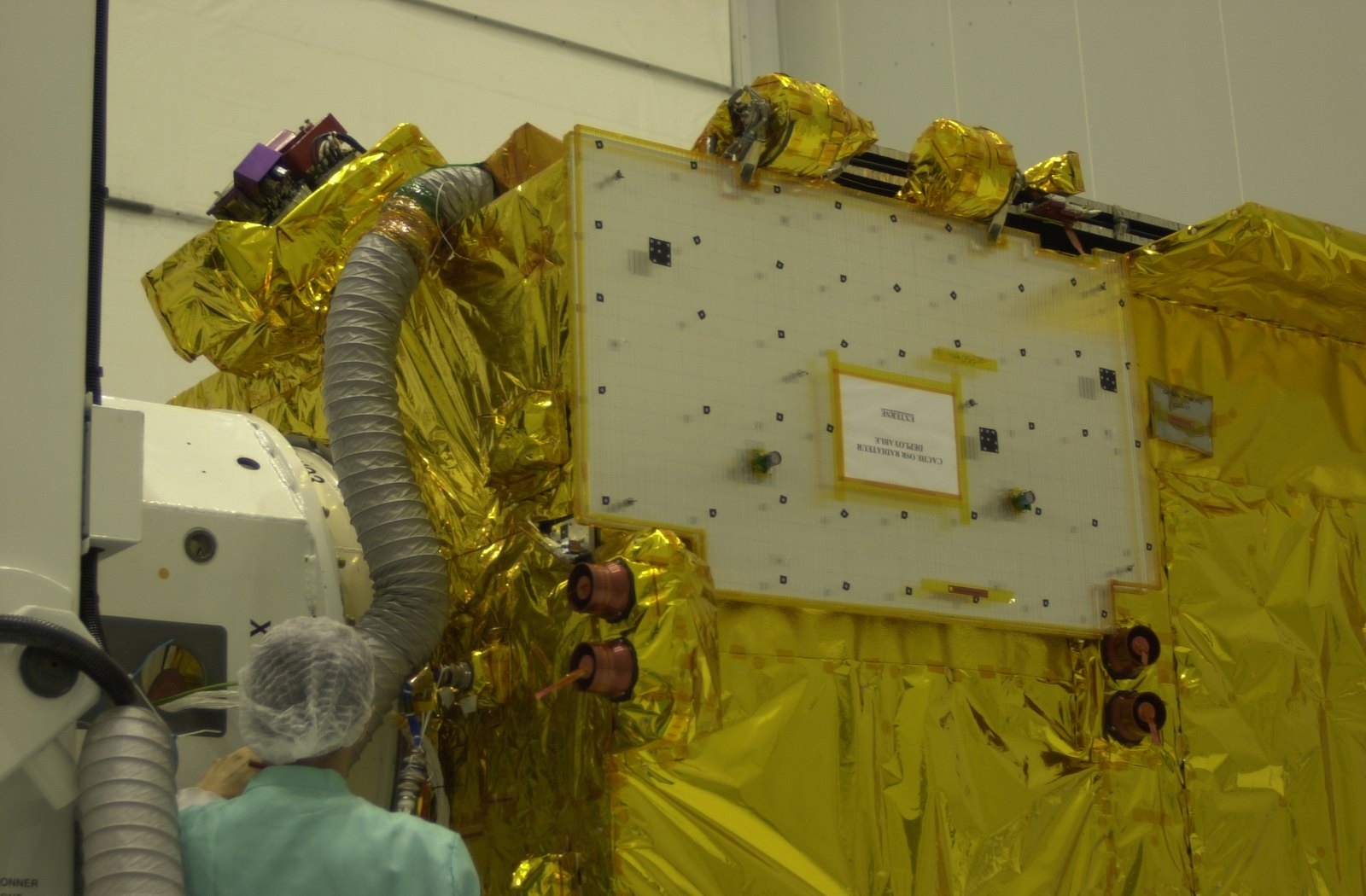
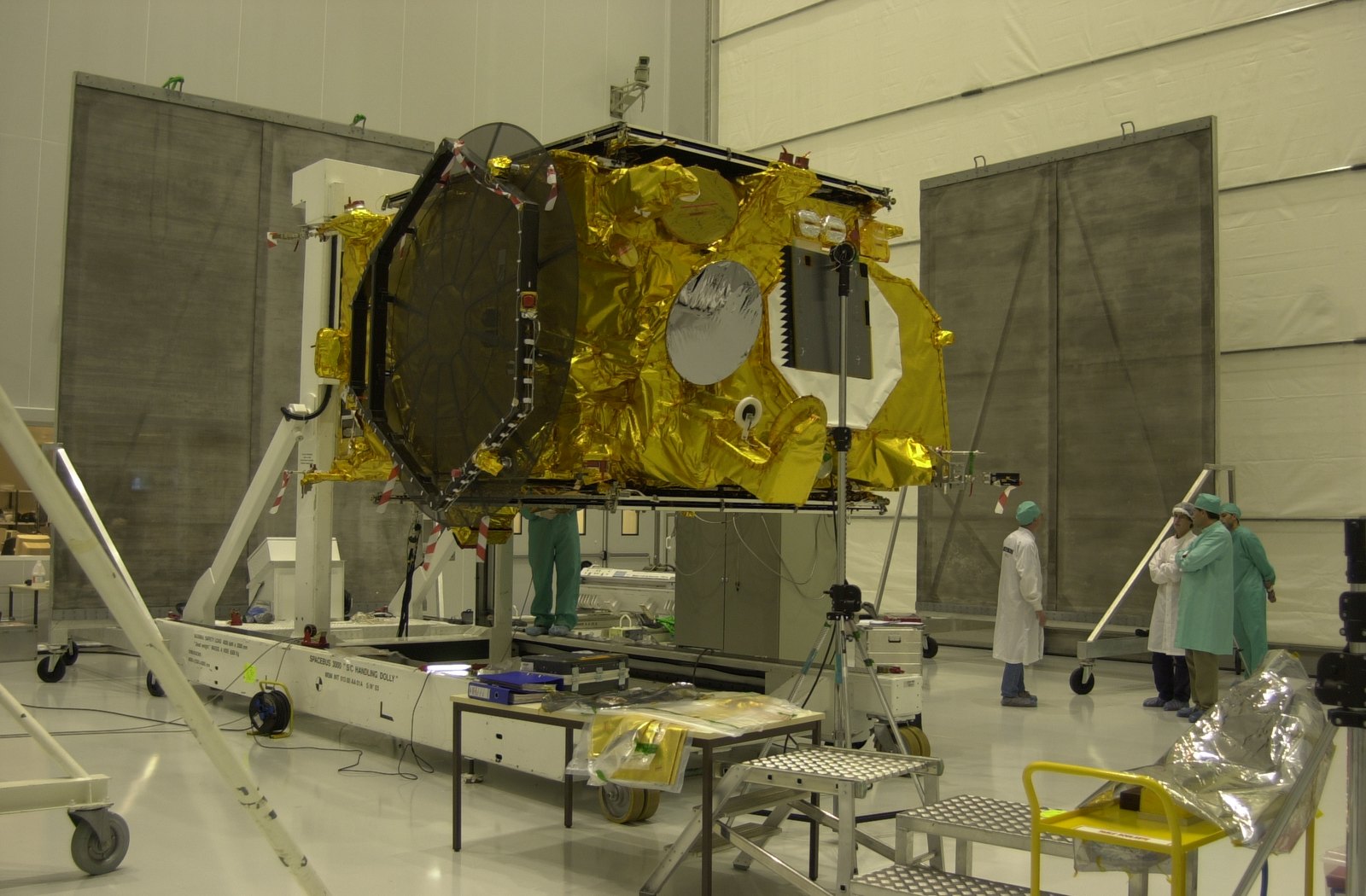
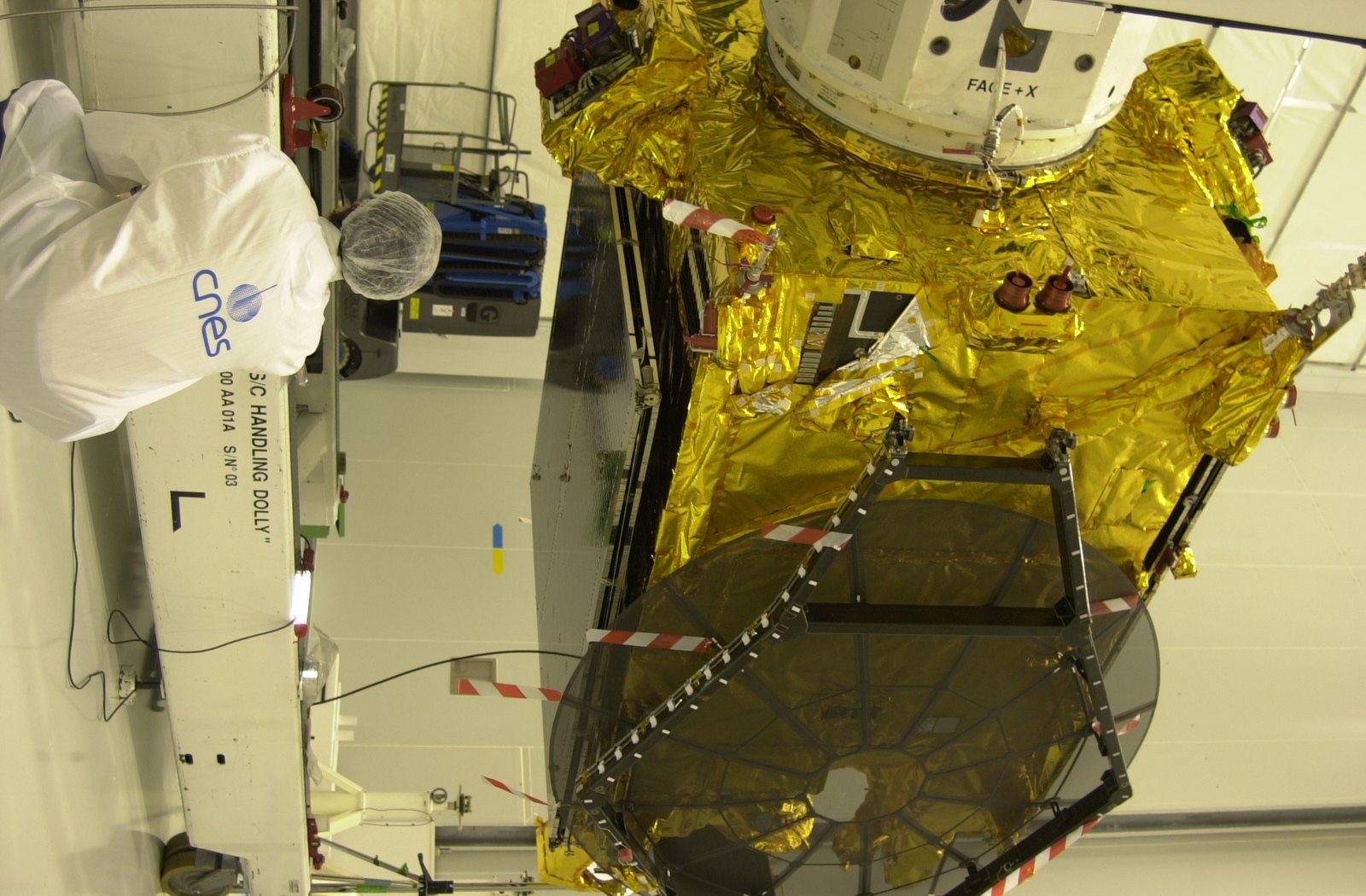
Stentor
An experimental French telecommunications satellite, built by Alcatel Space on a Spacebus 3000B3 platform for CNES, France Télécom and the French defence procurement agency, to test technologies for the next generation of telecom satellites. It was assigned to the first flight of the Ariane 5 ECA, the new heavy version of the launcher.
Rosetta
The European Space Agency’s mission to orbit a comet and land on it with Philae, booked on an Ariane 5 for 13 January 2003, bound for comet Wirtanen.
Ariane 5 at ELA-3
One launch, two fates
A launch campaign, made understandable
The 2004 CD-ROM for CNES followed a launch campaign step by step on an interactive map of the base:
- The launcher campaign. Stages arrive by sea; boosters, core stage, upper stage and equipment bay are integrated in the BIL.
- The satellite campaign. The satellite arrives, is checked and fuelled in the clean rooms.
- Combined operations. Satellite and launcher meet in the BAF, then the readiness review and the dress rehearsal.
- The launch. Roll-out, final preparation, the synchronised sequence and the mission.
Each step combined CNES launch footage, including the July 2004 launch (flight 163), with 360° views of the buildings shot on site. The opening animation drew a satellite, a launcher and the whole base in white lines on red Guianese earth.
Kourou in 360°
Fifteen views: Stentor and Rosetta in their clean rooms and Ariane 5 at the pad in 2002, shot on a Nikon D1 digital camera with a fisheye lens; then the space centre in 2004, from the entrance to the Jupiter control room. The 2004 views shipped as protected iPIX files and were decoded and converted into standard panoramas in 2026.
Underground, air, space
The environment changes. The discipline does not.
A cave, a weightless aircraft cabin, a satellite clean room: each one sets its own rules, and the job is the same. Understand the subject, plan the capture, accept the conditions you cannot change, and deliver something people can explore. That is the thread from Biron & Lascaux II to the A300 Zéro-G and Kourou.
Documentation and CD-ROM produced by Doo Interactive for CNES, 2002–2004. Doo Interactive was founded in 1998 and grew into a team of video editors and multimedia producers. Launch footage: CNES.
Read the first-person account on stephanejacob.com →
Facts: CNES, ESA, Spaceflight Now and Wikipedia.