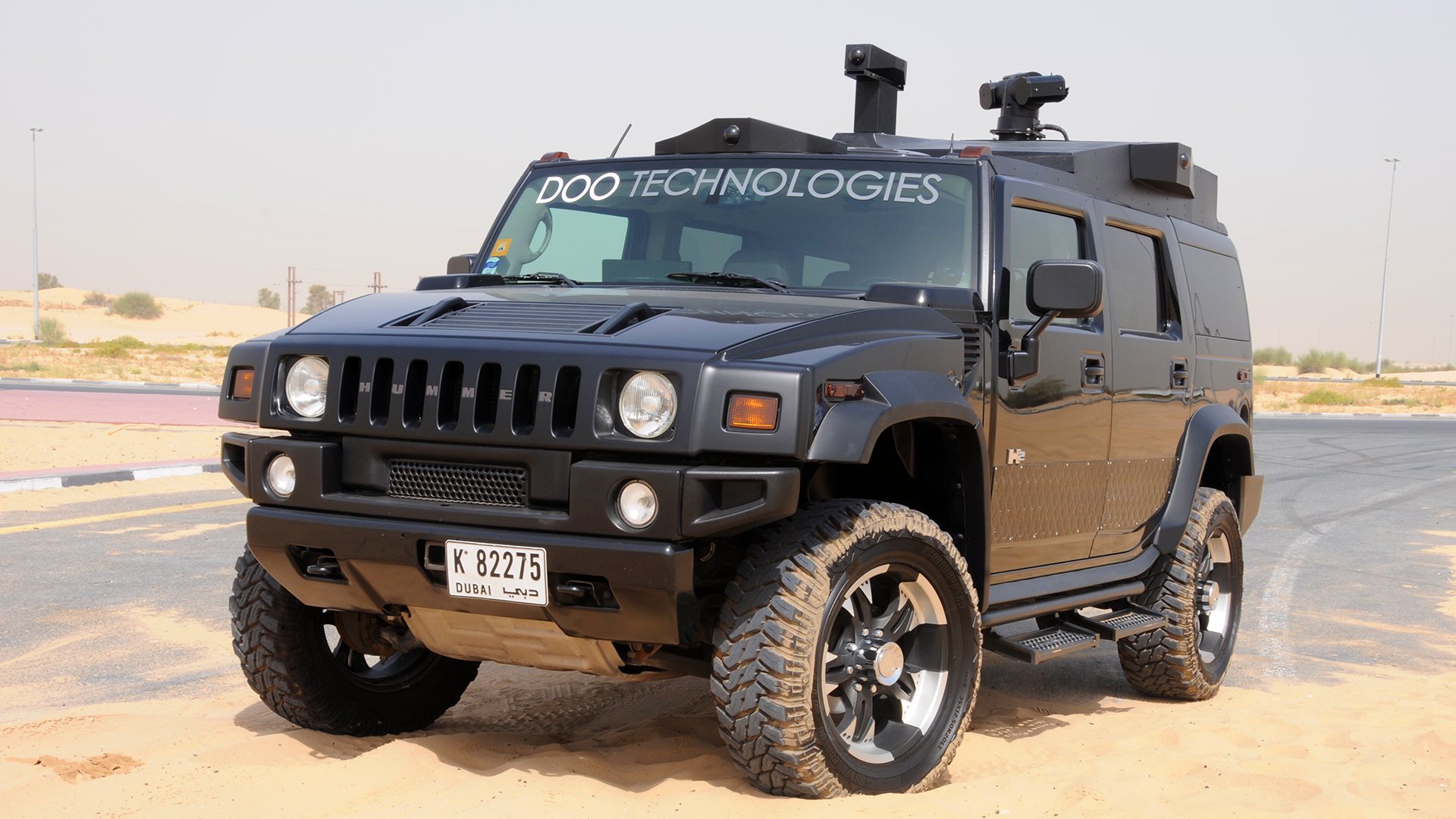
2009–2011: Doo Technologies built its 360° imaging into a complete mobile surveillance vehicle, with three camera layers, four operator screens, independent power and live transmission, first presented at Intersec 2010.
Case study · Doo Technologies · Mobile video surveillance · 2009–2011
360° vision, built into a vehicle
When a technology is hard to explain, build it.
By 2009 Doo Technologies held patents in 360° imaging, had built prototype cameras and written the software. The homeland security market, however, had no reference point for 360° vision. Presentations could not convey what a single camera covering every direction would change for an operator.
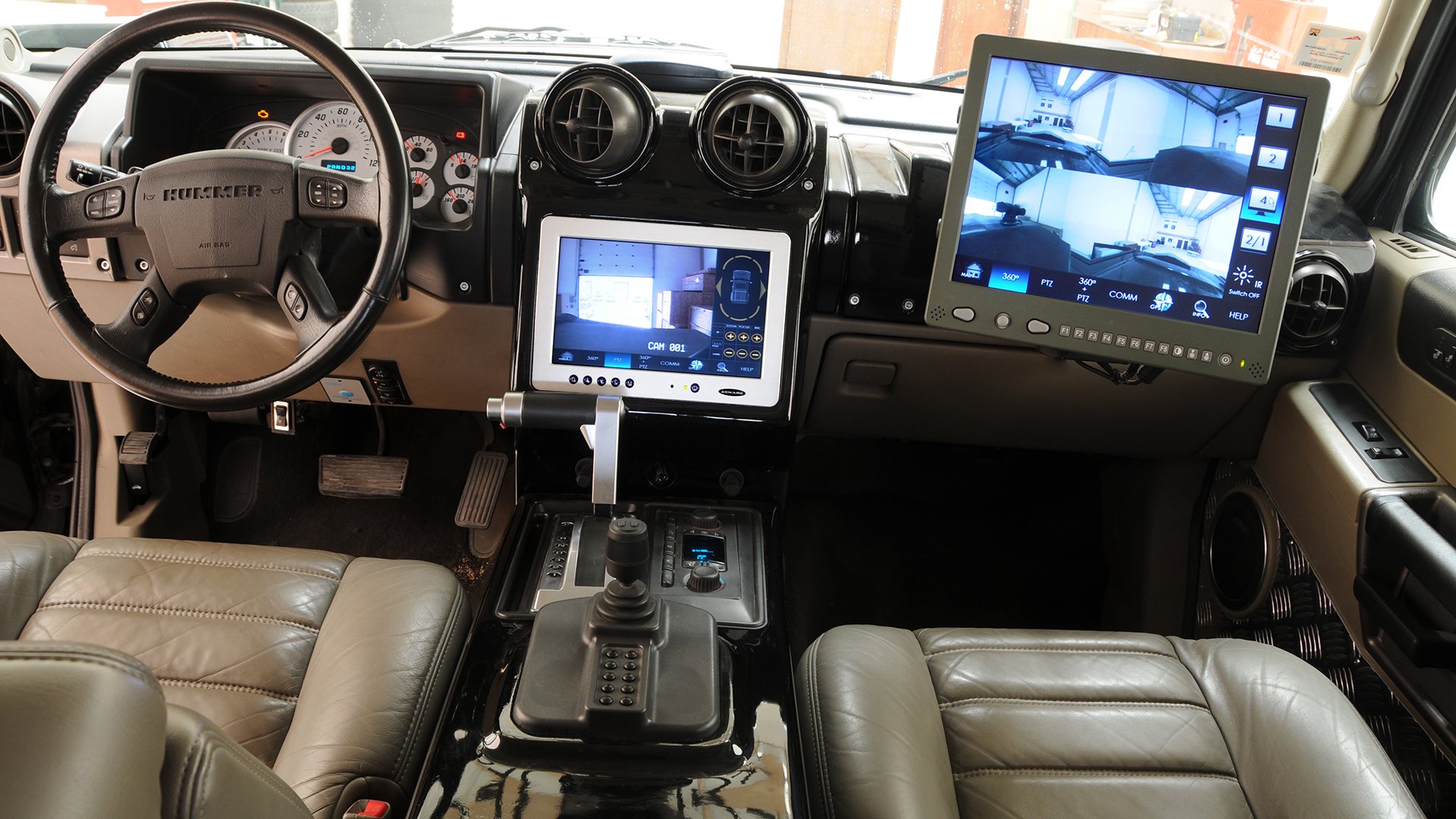
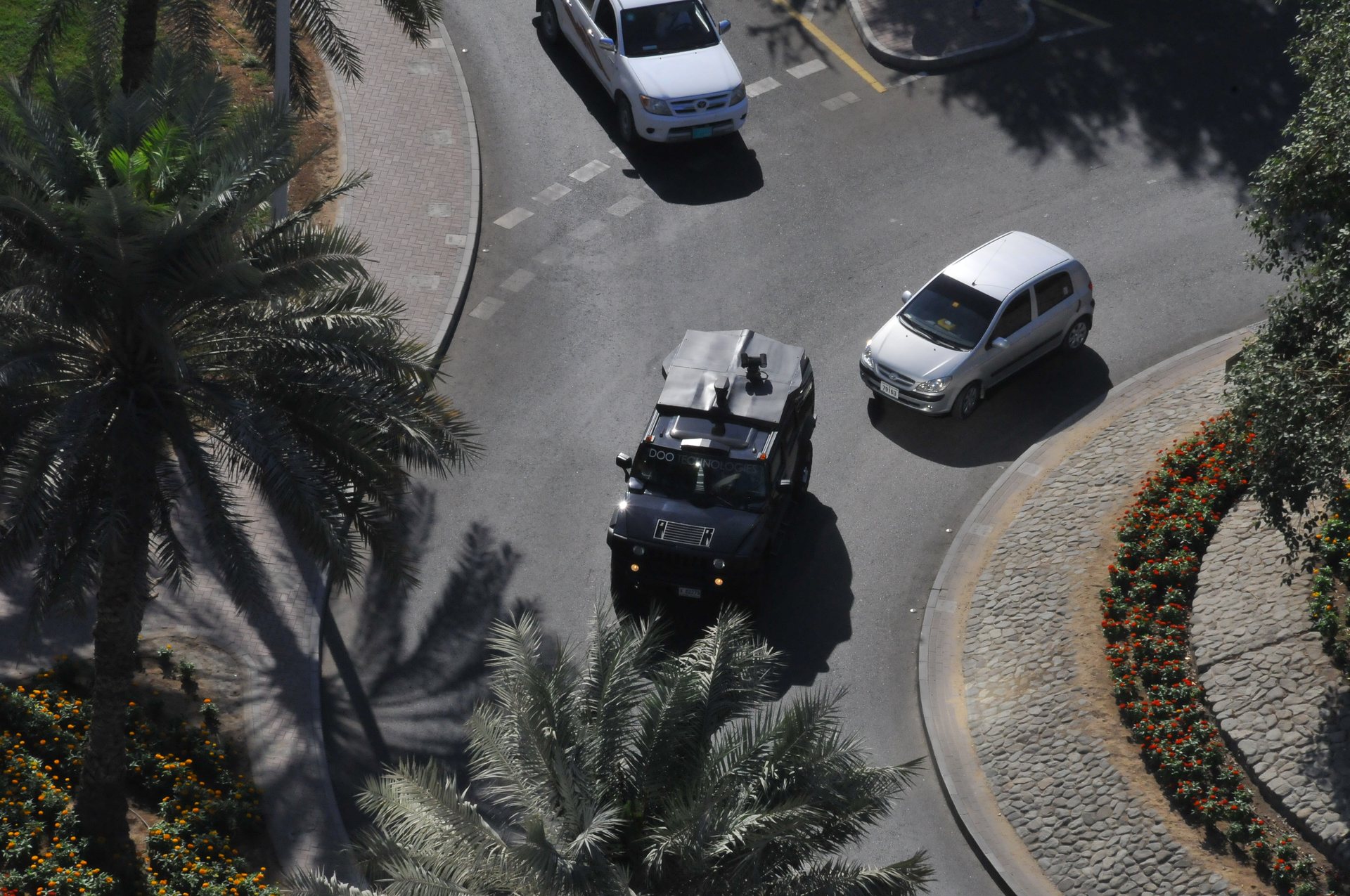
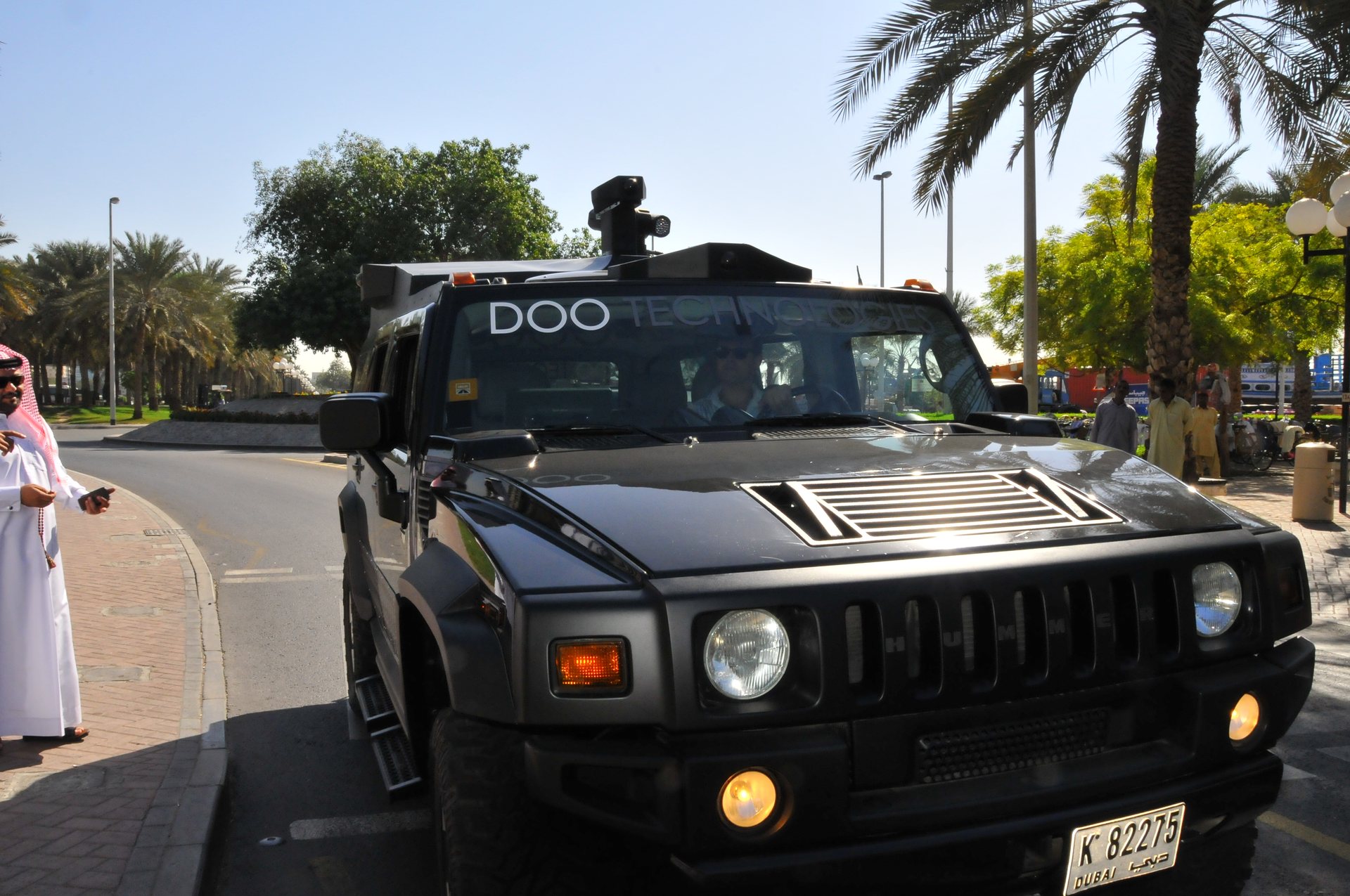
The answer was a complete demonstration vehicle. A Hummer H2 was rebuilt as a mobile video surveillance system with three camera layers, four operator screens, an onboard computer, independent power and live transmission. It was first presented at Intersec 2010 in Dubai.
The Doo Technologies mobile video surveillance vehicle.
3
camera layers, 0 to 1000 m
4
operator touch screens
8 h
autonomy, engine off
2010
first shown at Intersec
Origins
A periscope principle for 360°
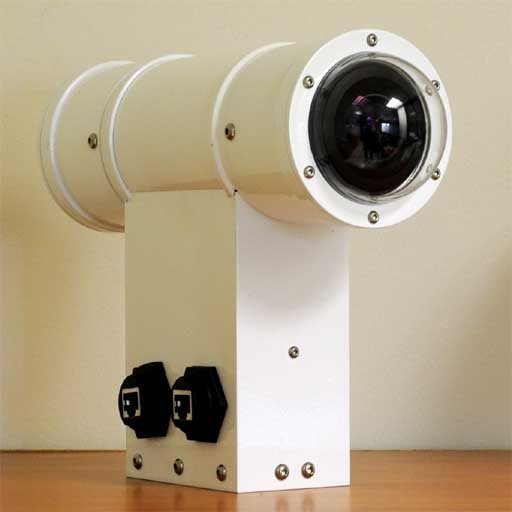
The camera research began in 2001, when sensors were large and affordable cameras were DV camcorders. Back-to-back cameras placed their lenses too far apart for a clean stitch. Doo’s answer was to face two cameras towards each other and fold the light through a prism and mirrors, as a periscope does, bringing the optical centres together. Several versions followed, including the XCam and the TCam.
The TCam: two optics folded into one compact body.
The vehicle
Engineered as a working platform
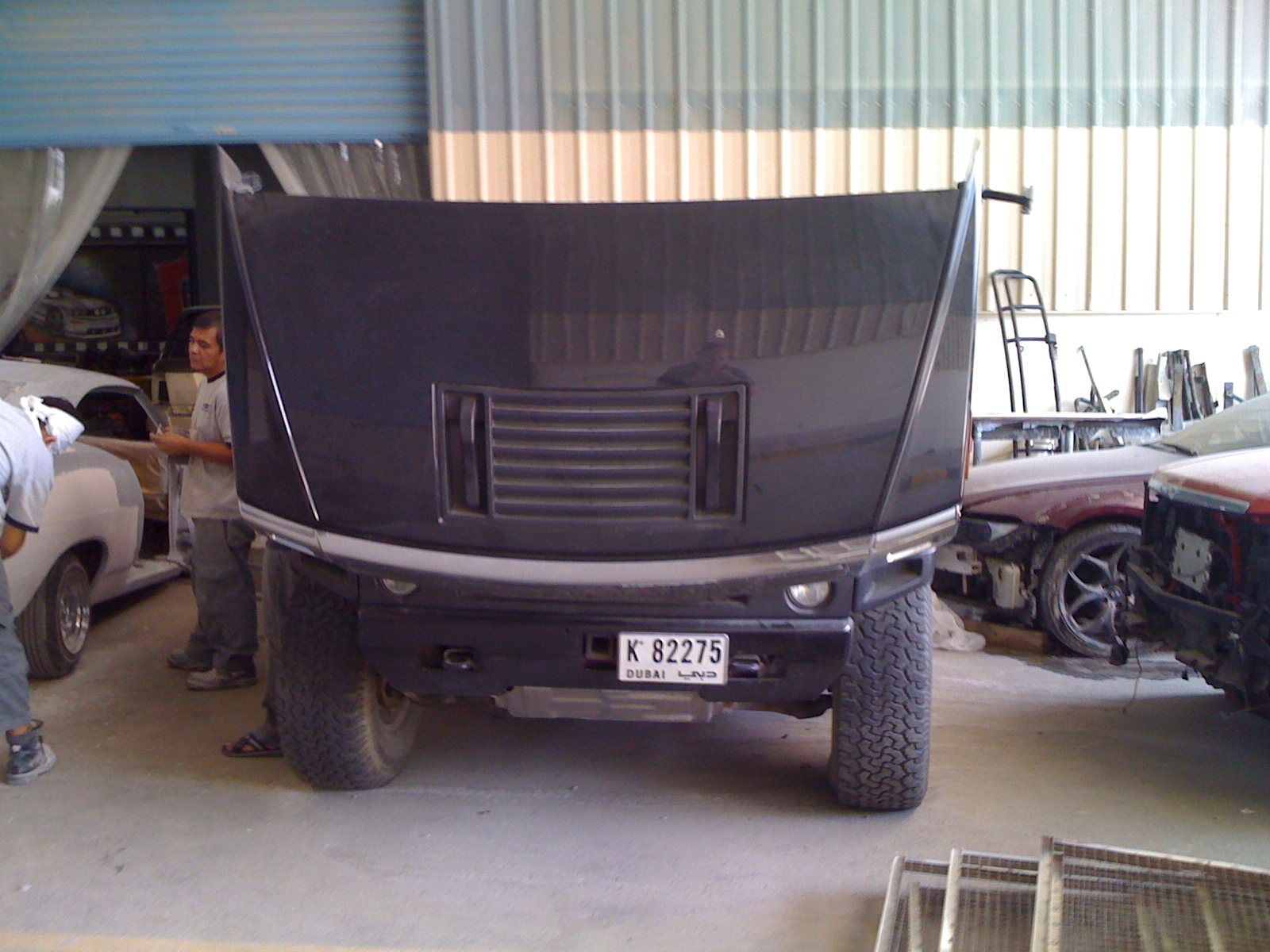
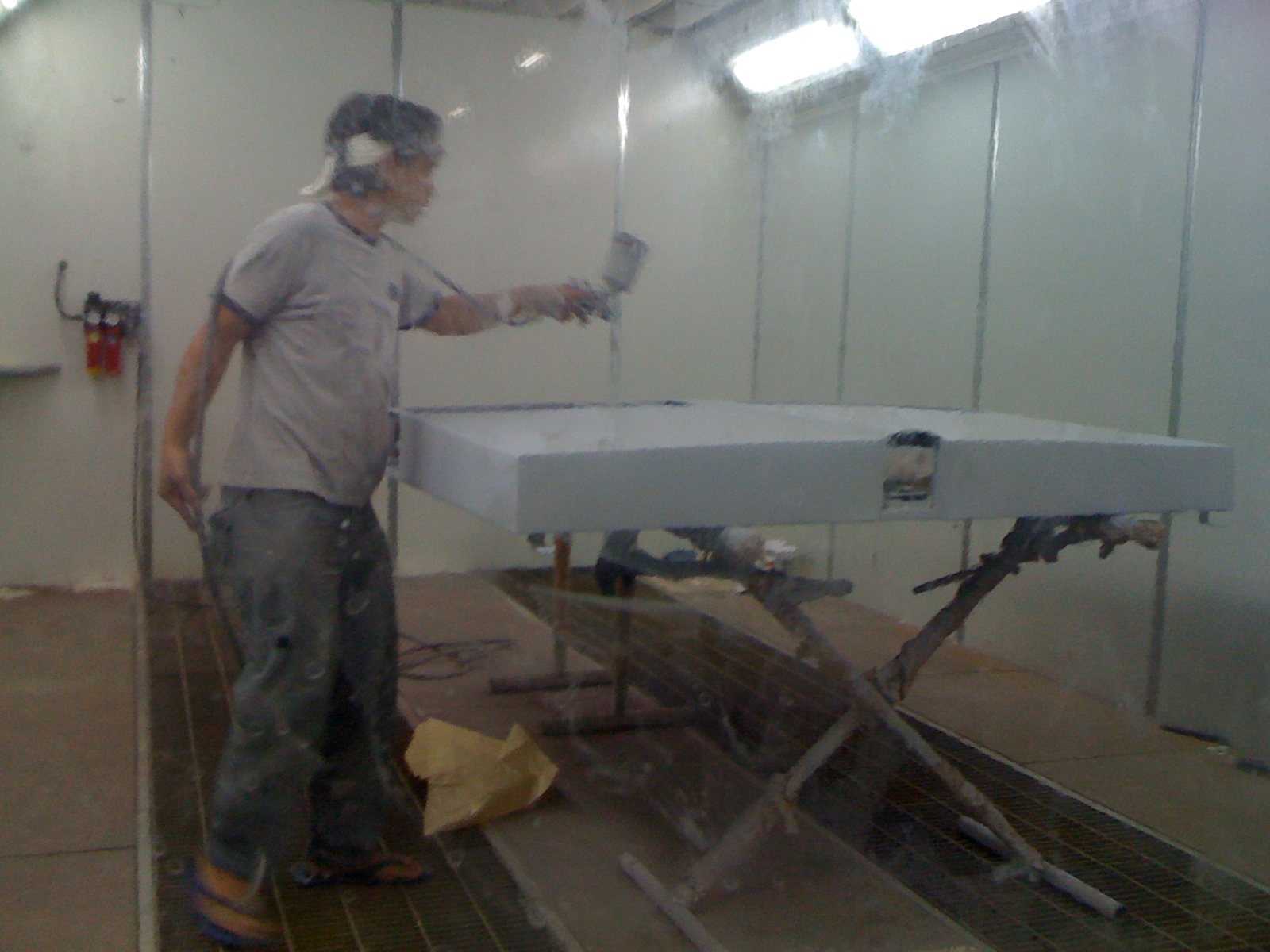
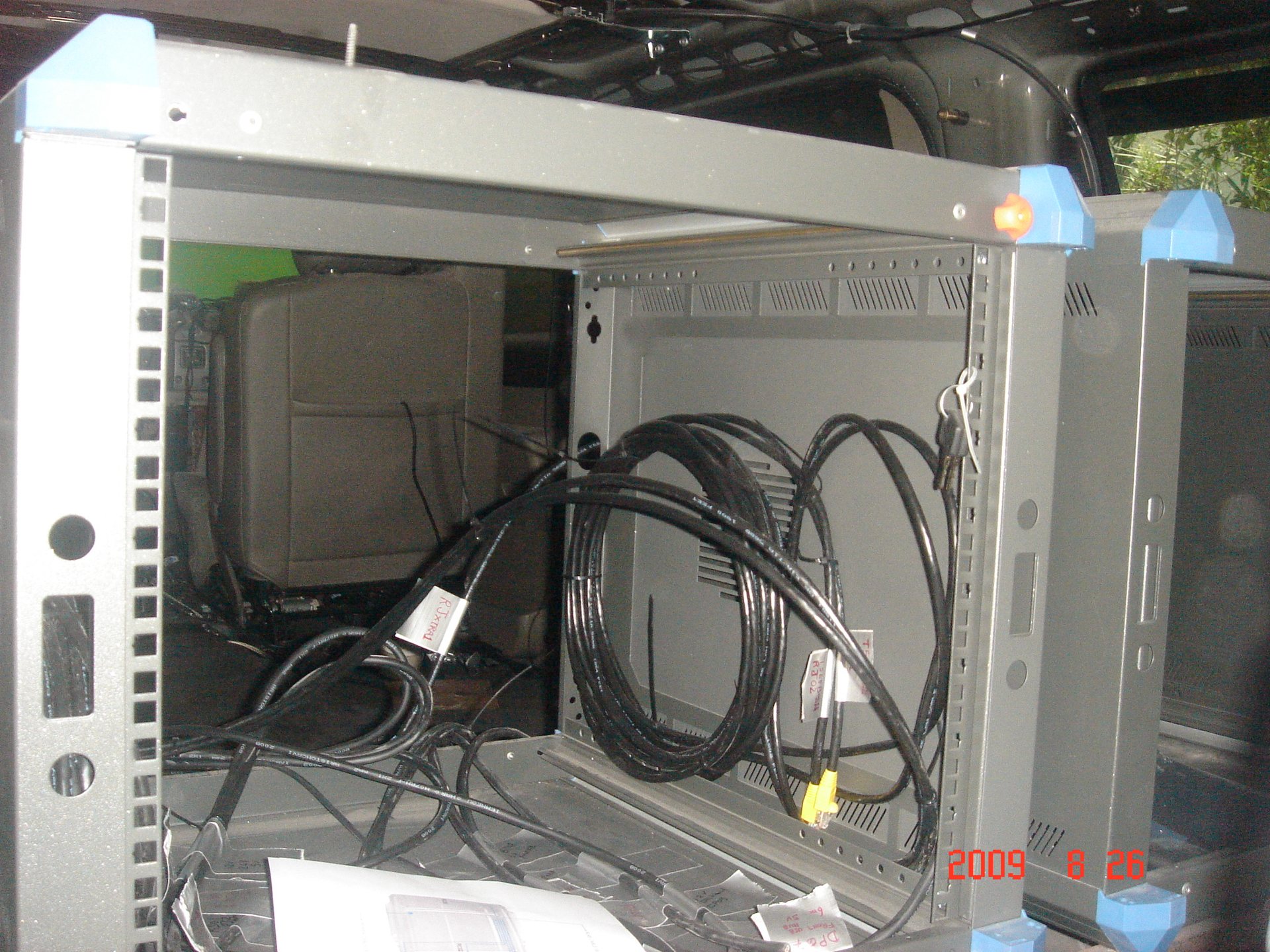
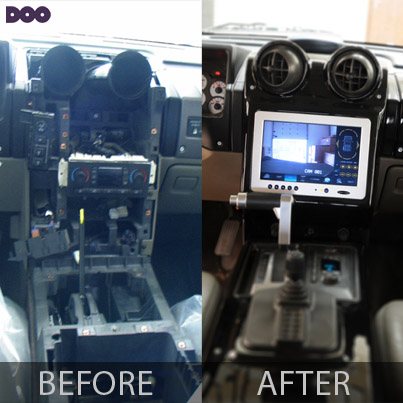
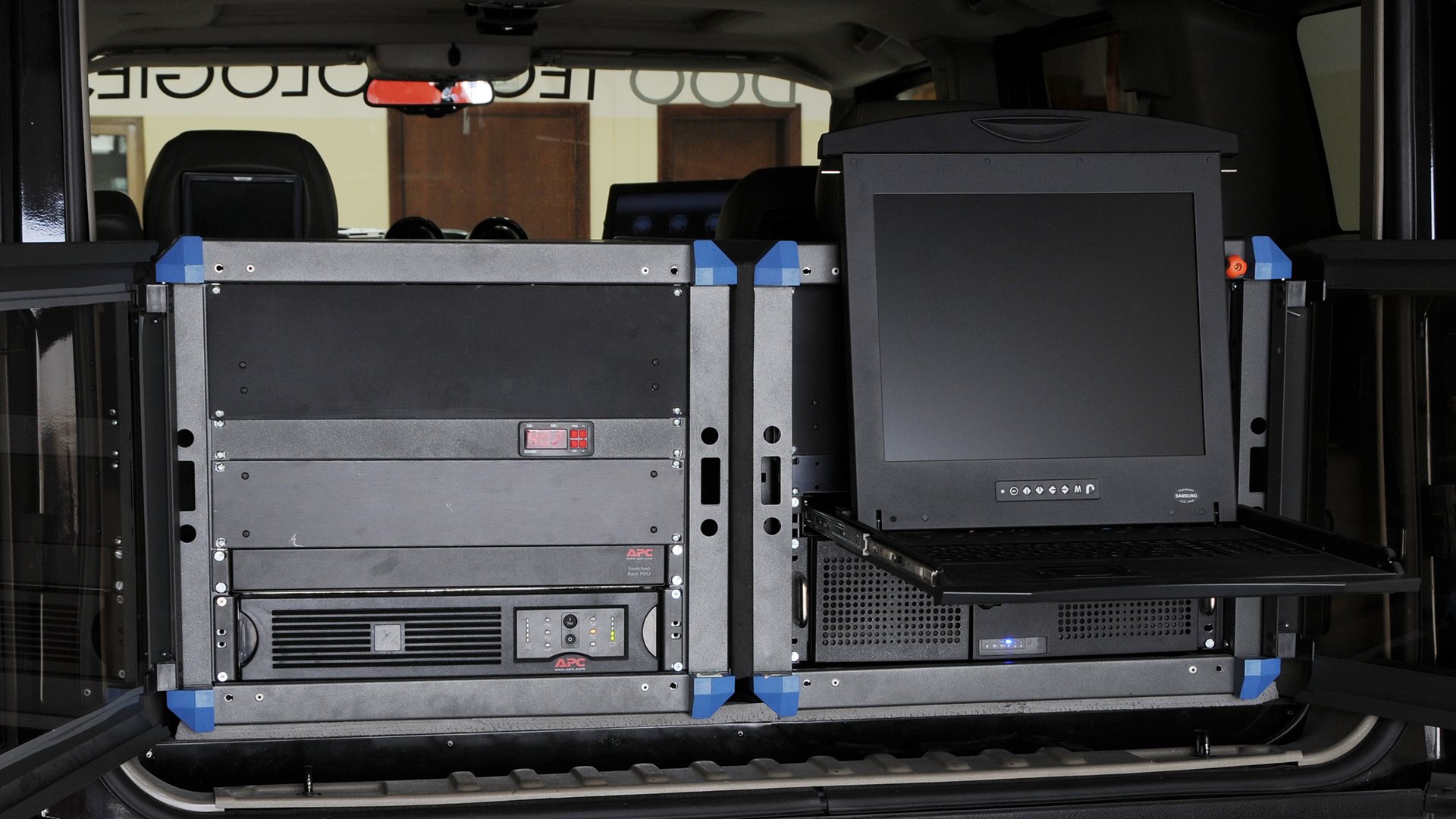
The bodywork was carried out with a custom car builder formerly of West Coast Customs. The body was stripped and rebuilt, the cabin fitted with screens and controls, and the boot with an equipment rack housing the computer, power and transmission systems.
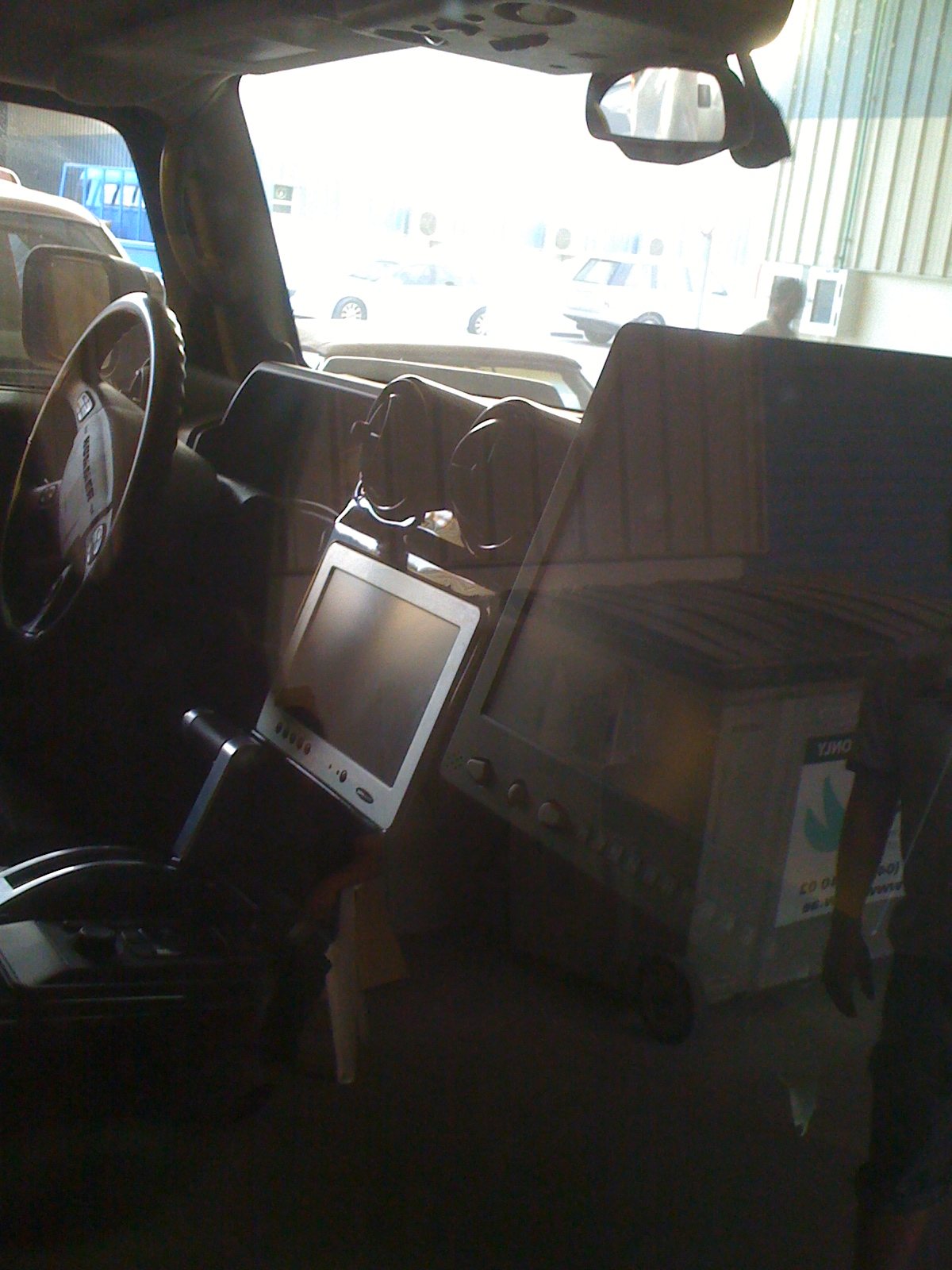
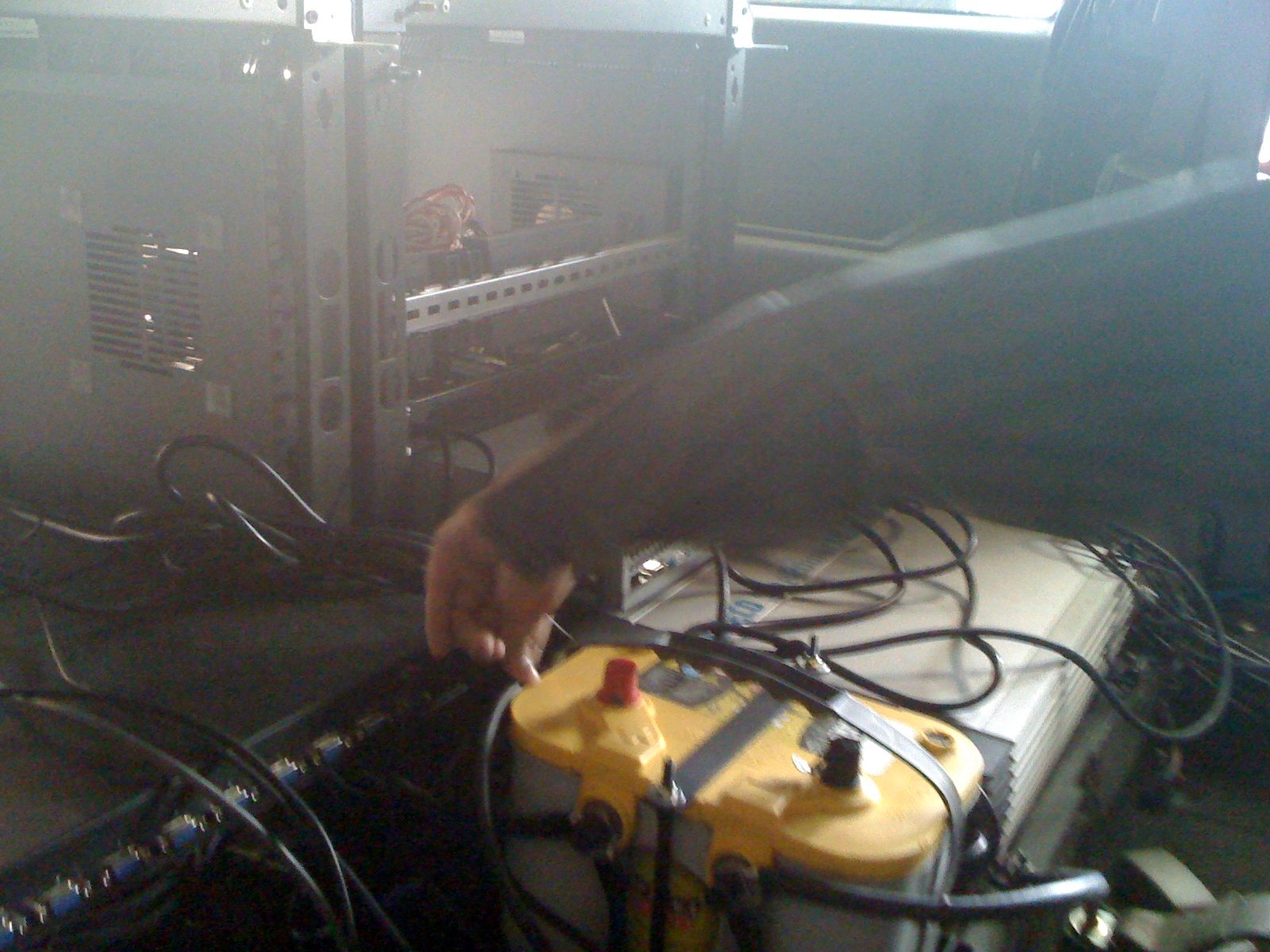
Bodyshop.Paint booth.Equipment rack before integration.Cabin screens.Power system: battery, inverter and UPS.Dashboard, before and after.
Camera architecture
Three ranges, one system
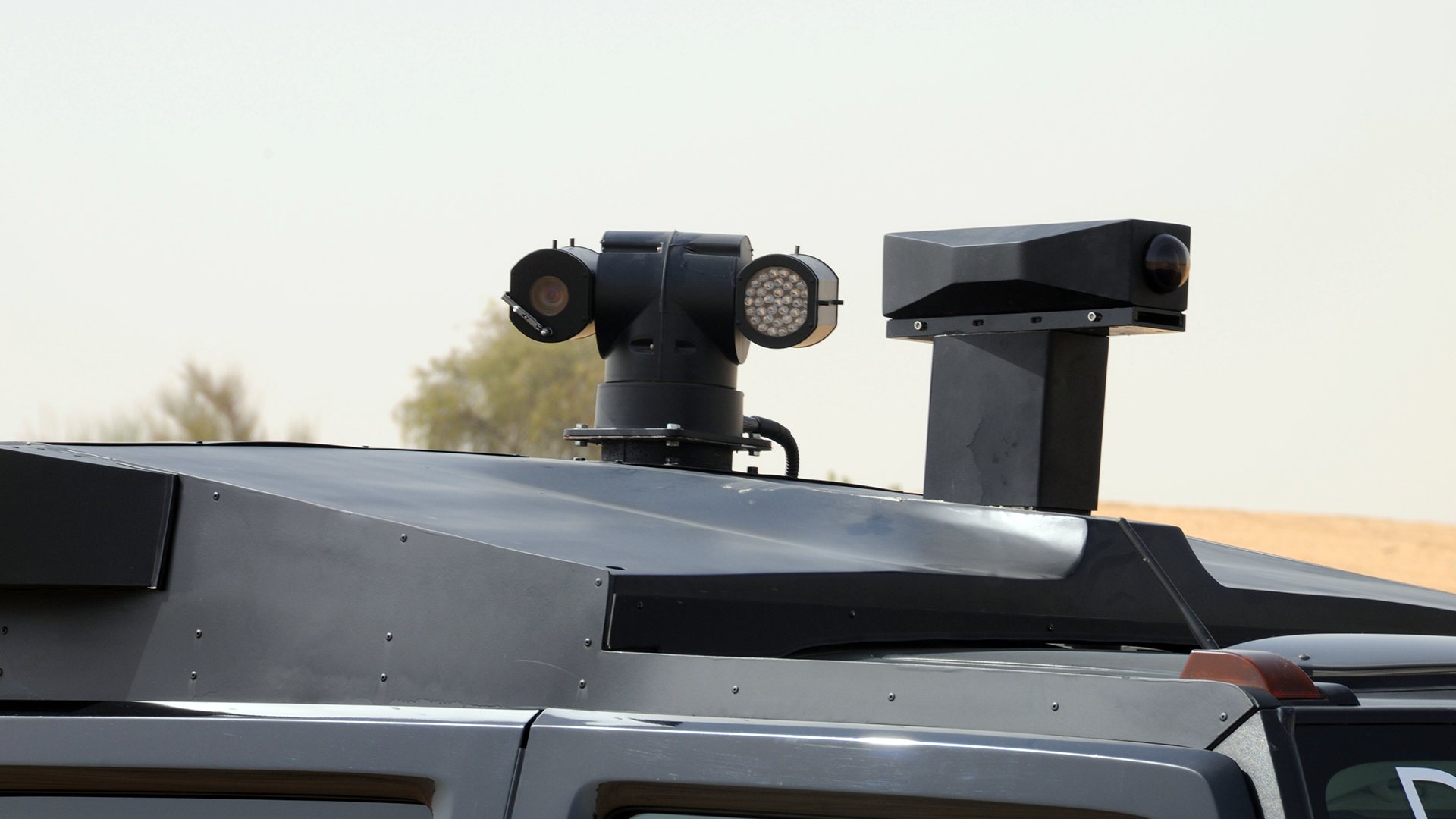
Each camera layer covered its own distance and ran in parallel. Selecting a point in the 360° view directed the PTZ camera to it, combining situational awareness with long-range detail.
1000 m200 m50 m
Short range · 0–50 m
360° camera
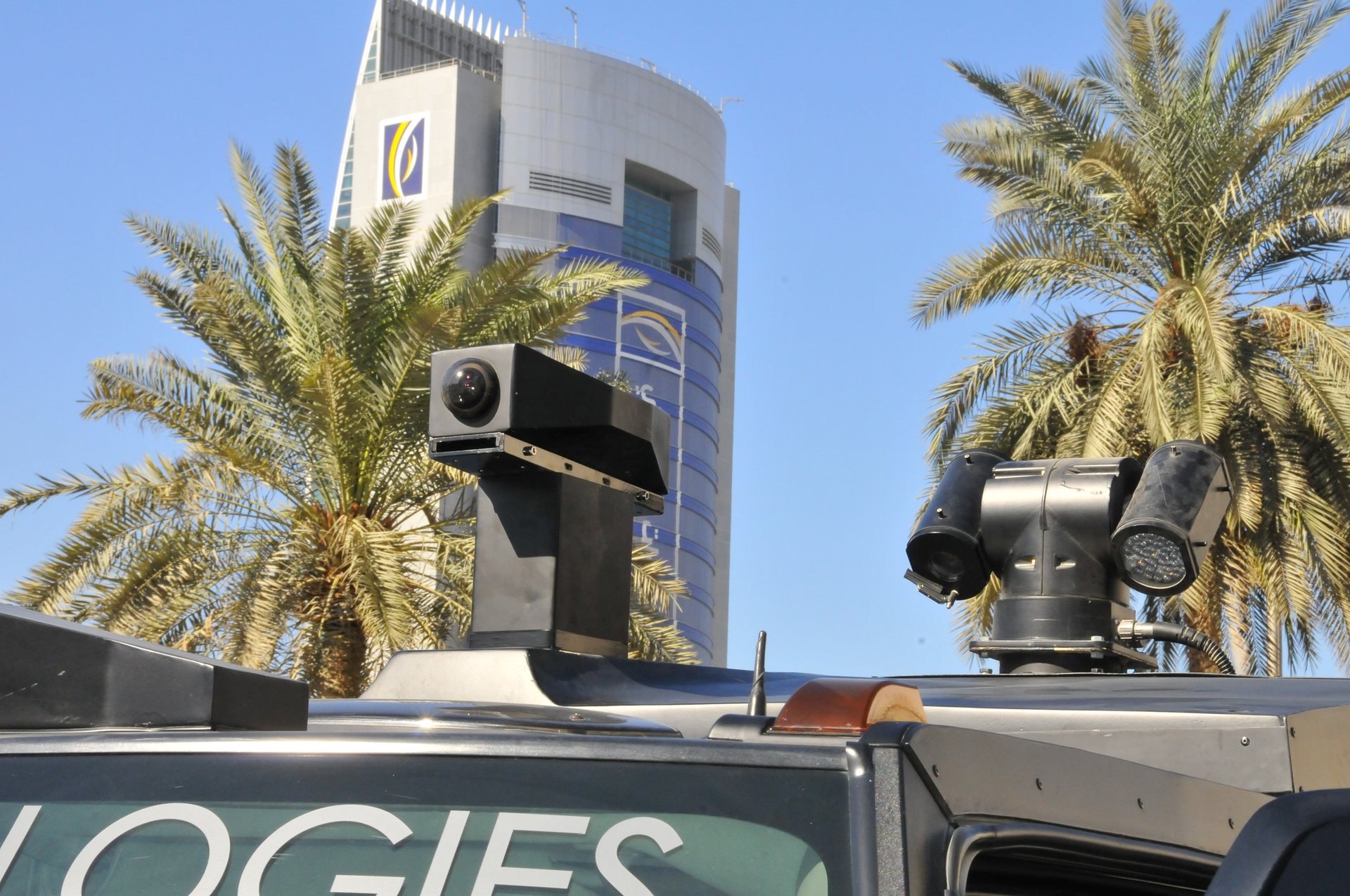
A dual 3-megapixel 360° unit sees the full sphere around the vehicle at once: 4096×1536, day and night.
Medium range · 25–200 m
Four 180° cameras
Four 2-megapixel cameras, front, back, left and right, stitched into an 8-megapixel panorama.
Long range · 100–1000 m
Infrared PTZ
A pan-tilt-zoom camera with 36× optical zoom and infrared lighting, driven from the 360° view.
Integration
A mobile command post
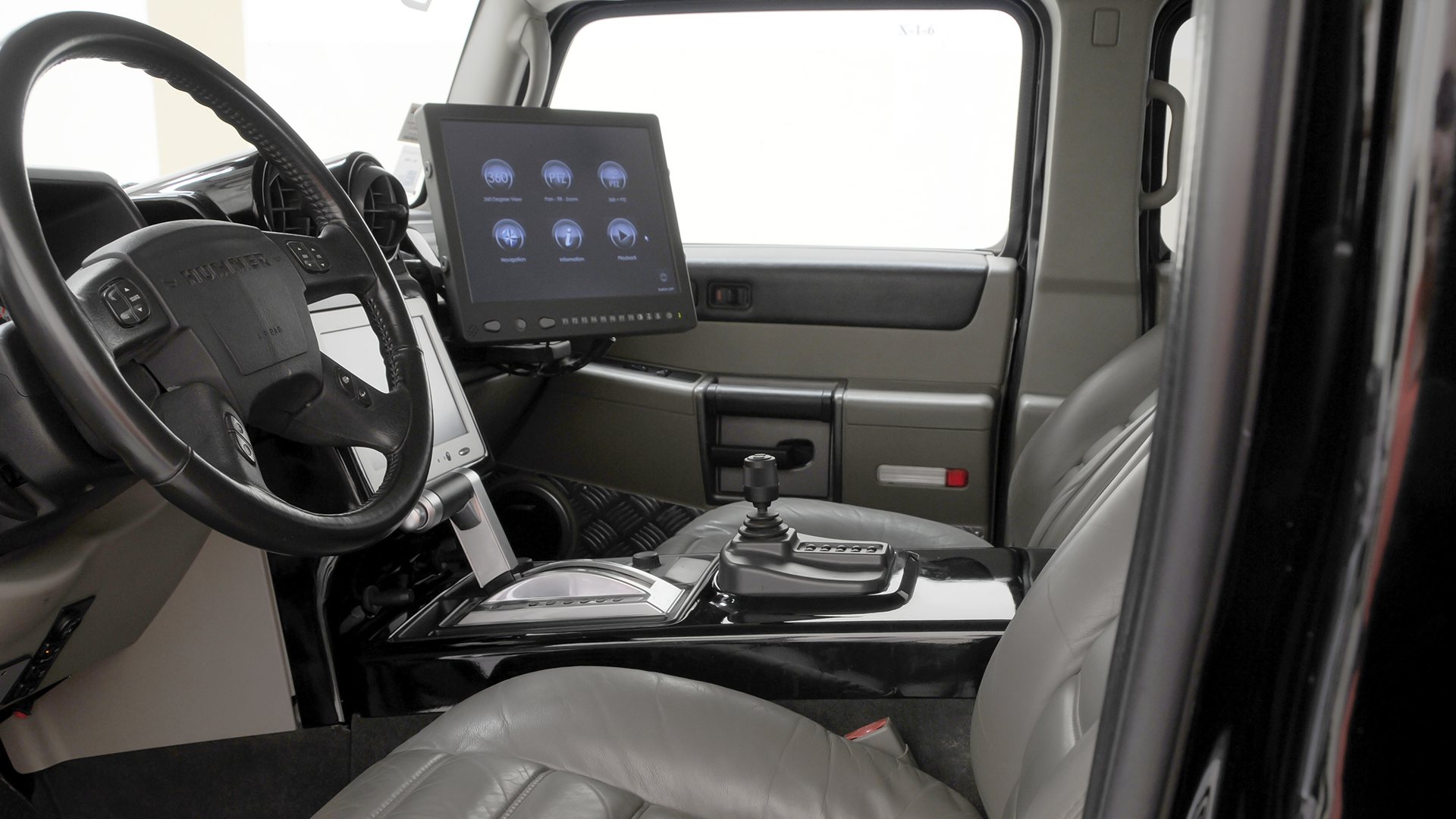
Four touch screens and a joystick allowed four operators to work independently on the same cameras. A rack-mounted computer designed for 24/7 operation handled capture, recording and display, with GPS, 3G, Wi-Fi with a long-range antenna of more than 50 km, and an optional radio video link. The base could access every function remotely over a secure connection.
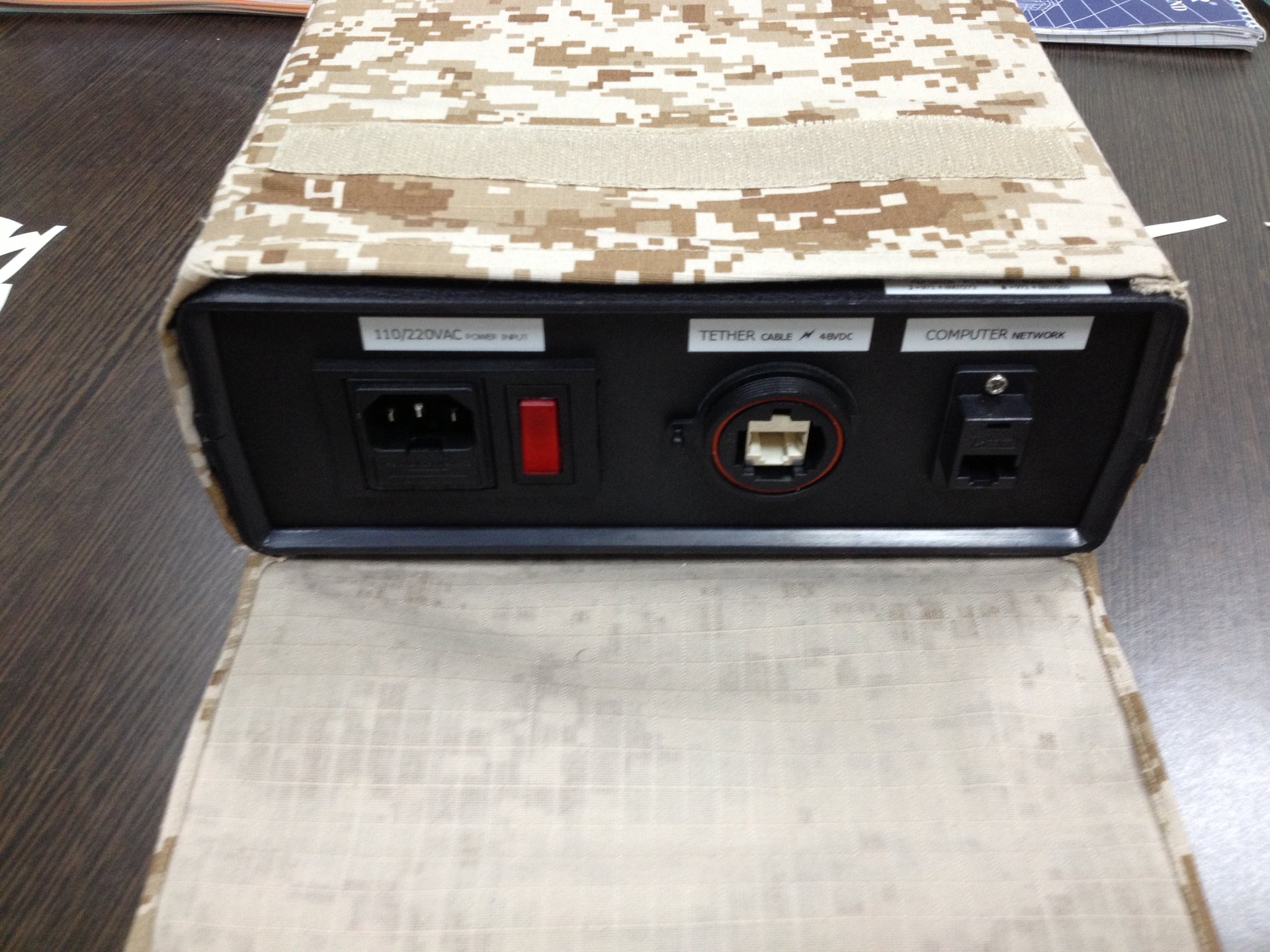
A dedicated auxiliary power unit, with a second alternator, capacitor, marine battery, inverter, UPS and 5, 12, 24 and 48 V converters, kept the full system running for up to eight hours with the engine off.
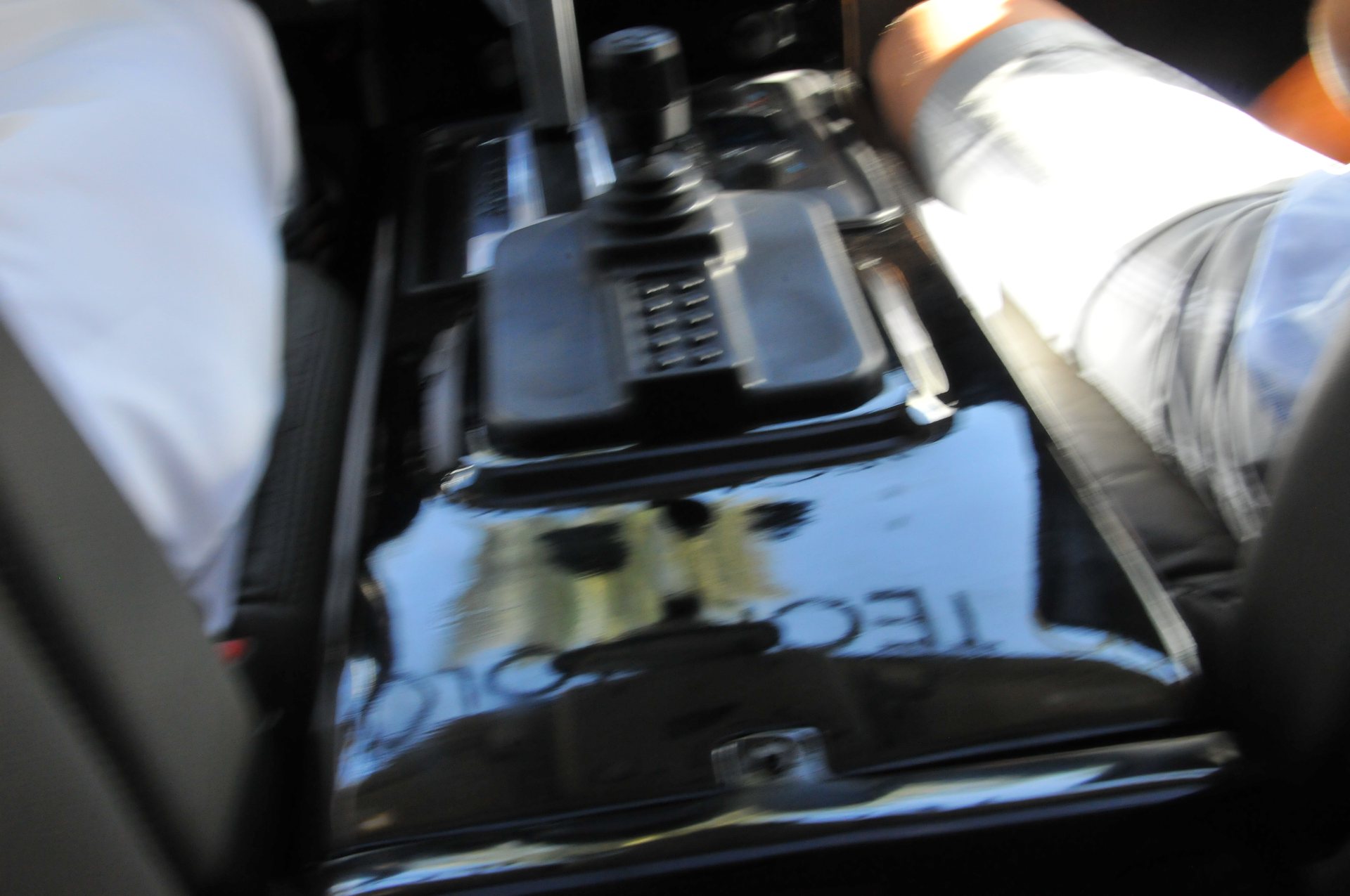
Driver and front passenger screens, with the joystick between the seats.The front passenger touch screen.The rack in the boot: computer, power and transmission.On the roof: the 360° camera and the infrared PTZ.
Software
One camera, multiple users, multiple views
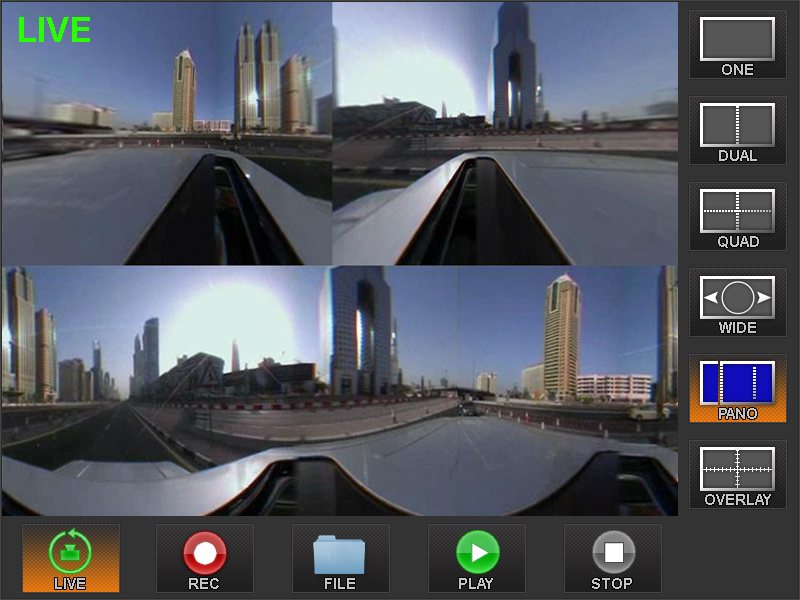
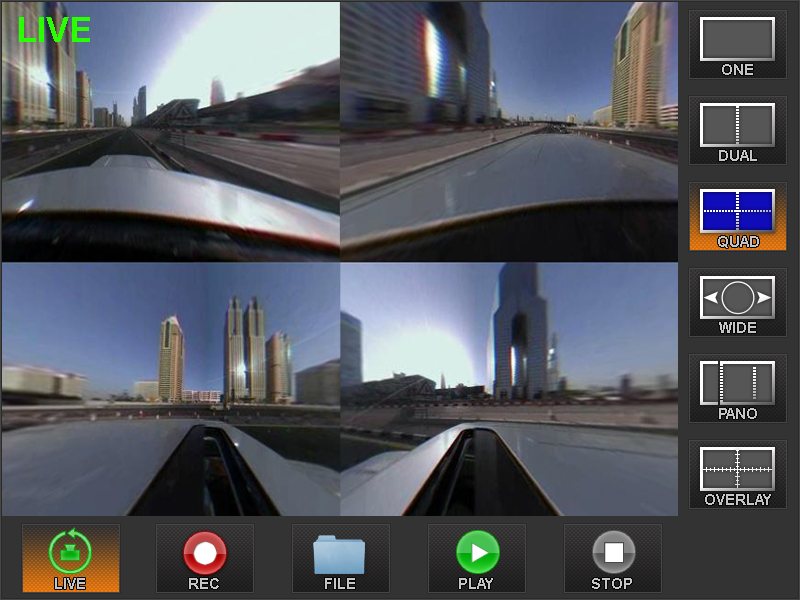
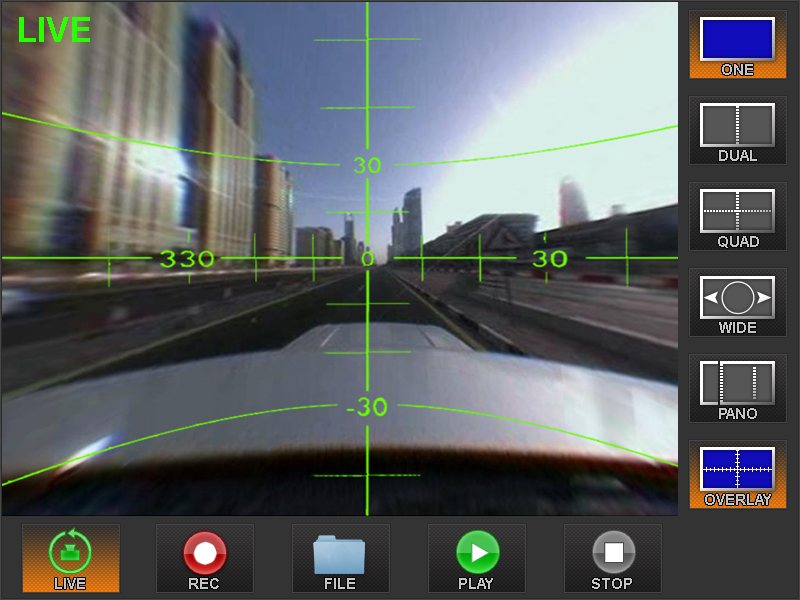
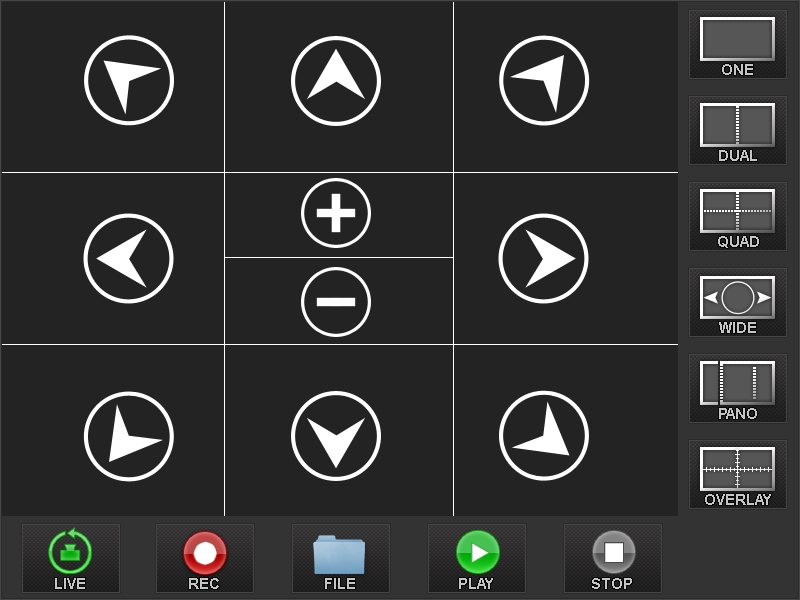
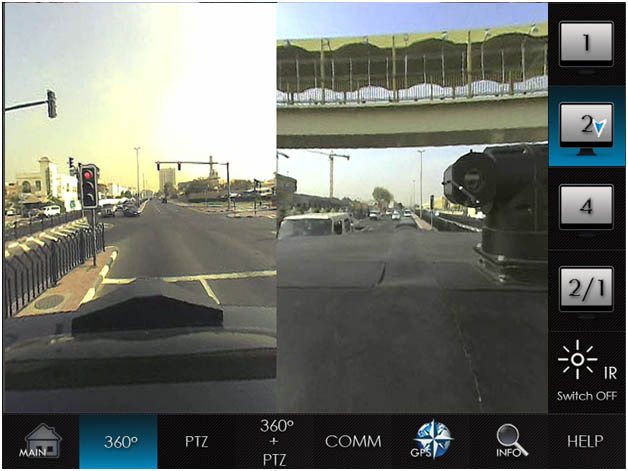
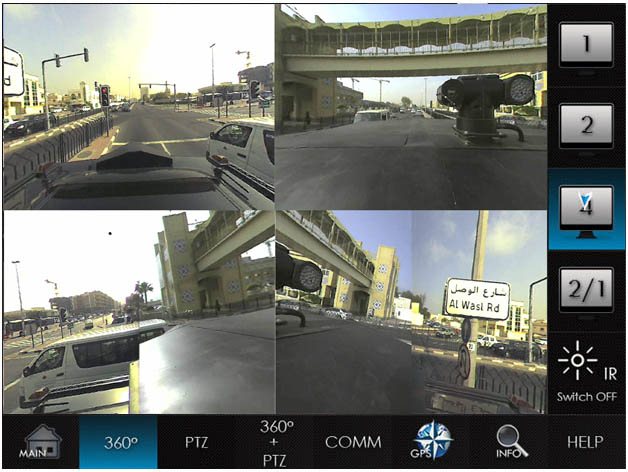
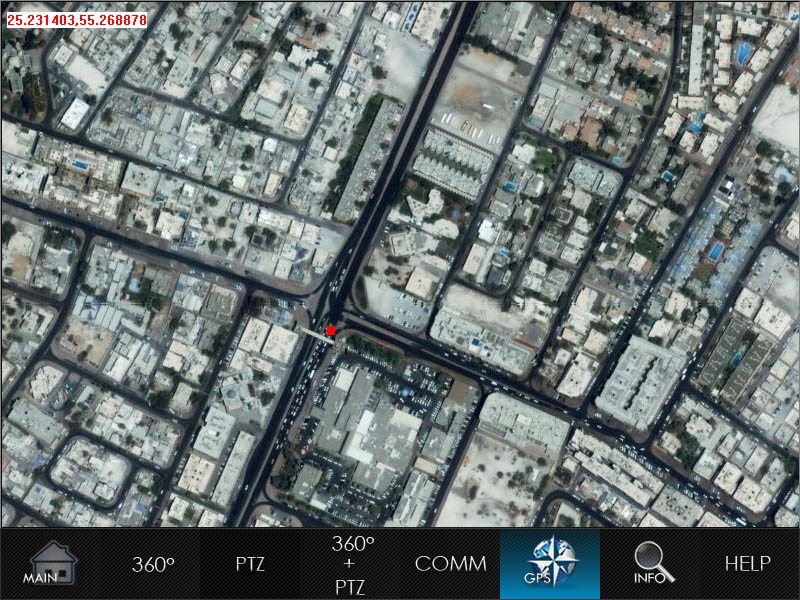
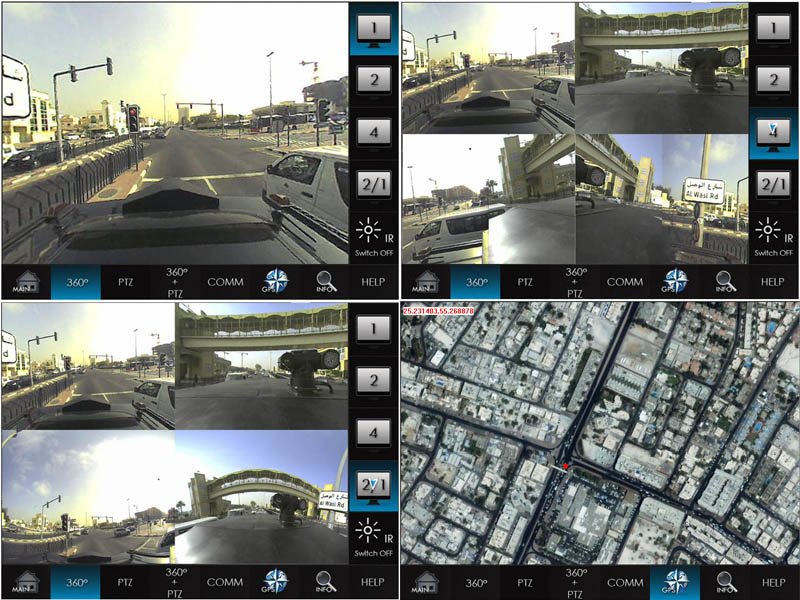
The touch interface let each operator navigate the live 360° video in single, dual, quad or panoramic mode while it was recorded, switch between day and night modes, steer the PTZ, follow the vehicle on a map and replay any recording, still fully navigable, with time and GPS data.
Live: the 360° camera unwrapped into a panorama.Live: four independent views from one 360° camera.The angle grid shows where you look, relative to the vehicle.Touch navigation: pan, tilt and zoom inside the 360°.360° on the left, the PTZ camera on the right.Four screens of 360° and PTZ in one layout.GPS view: every recording is geotagged.Four touch screens, four operators, one system.
Demonstration
From Intersec to the street
After Intersec 2010 the vehicle served as Doo Technologies’ demonstration platform in Dubai, showing in minutes what presentations could not. It also drew interest from Rockwell Collins, with whom integration discussions took place in Cedar Rapids.
The H2 also opened the way to Atlantis The Palm. It was presented to the Atlantis team when Doo Technologies proposed the 2011 proof of concept that became the Sandance coverage.
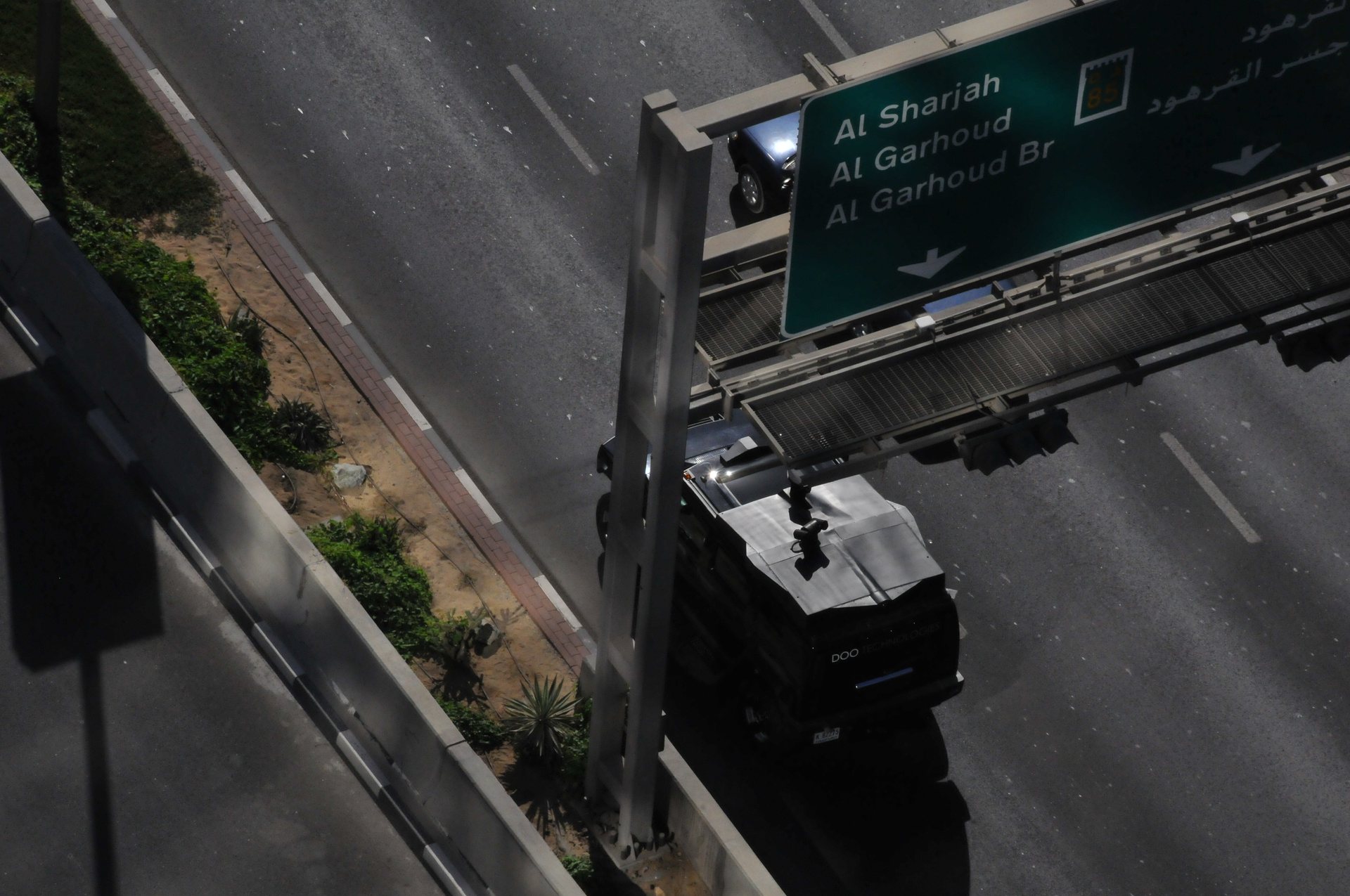
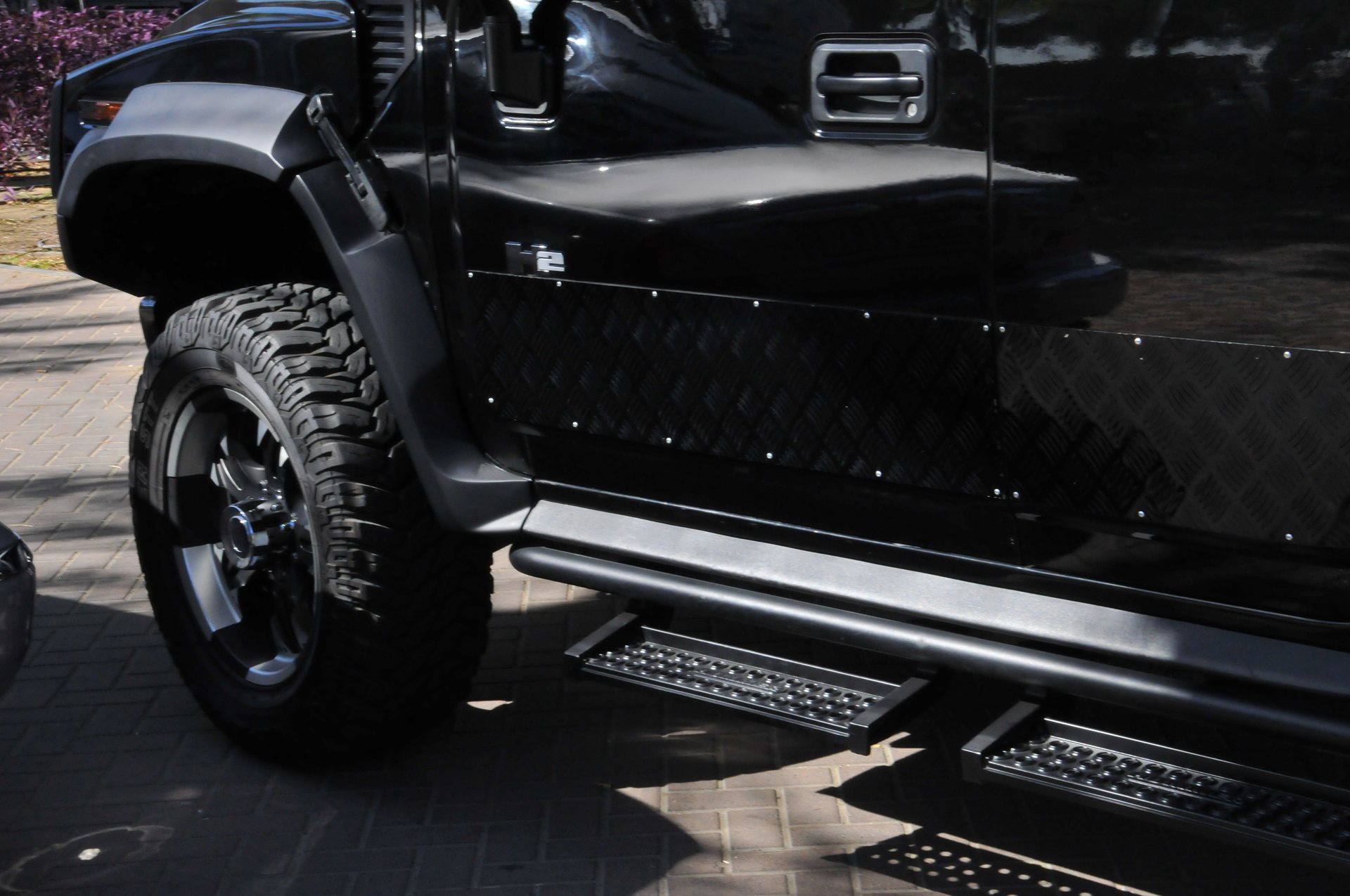
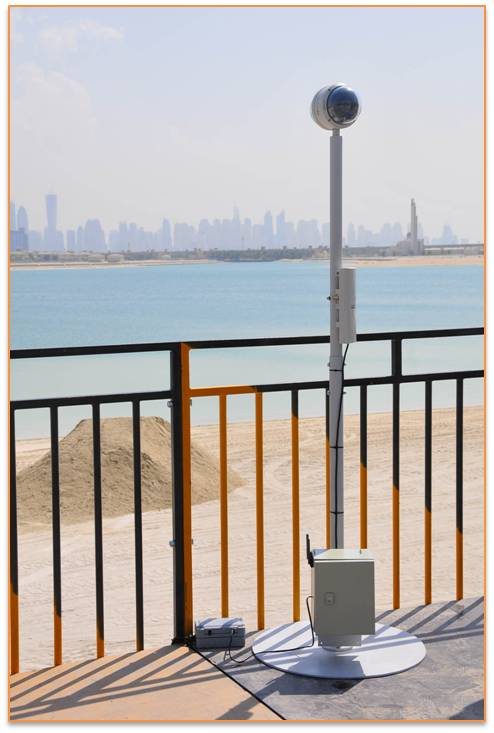
On the road in Dubai, seen from above.Under the gantries of the city.The camera mast and the PTZ.Ready for a demonstration.The joystick that drives the cameras.Custom bodywork and side steps.
Applied technology
One core, many applications
With visibility came new applications for the same cameras and software: USB, FireWire, Ethernet, Wi-Fi, 3G and satellite links; visible and night vision; drones, an unmanned surface vehicle, cave inspection and pipe mapping. The rugged time-lapse camera later recorded New Year’s Eve 2011 at Atlantis The Palm.
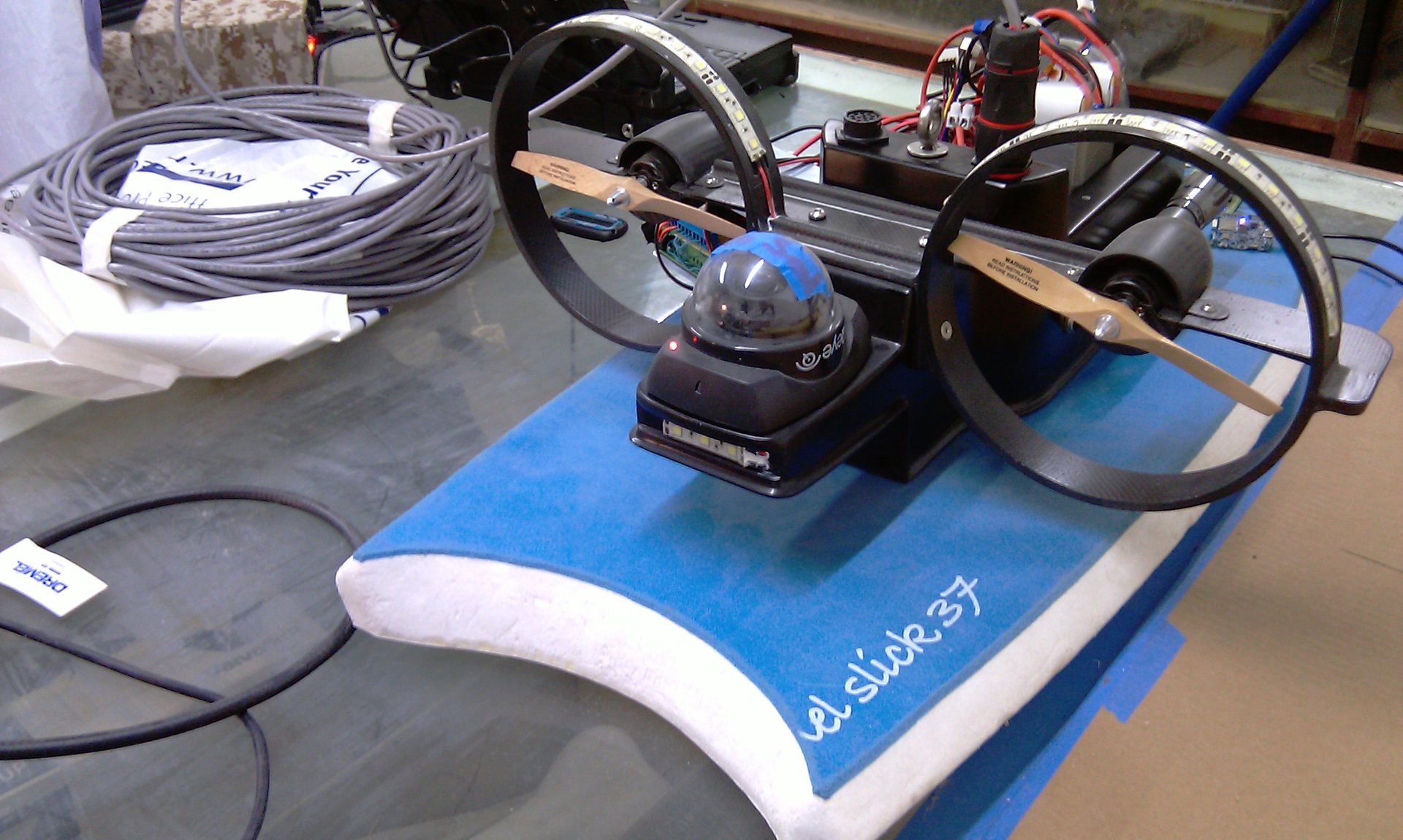
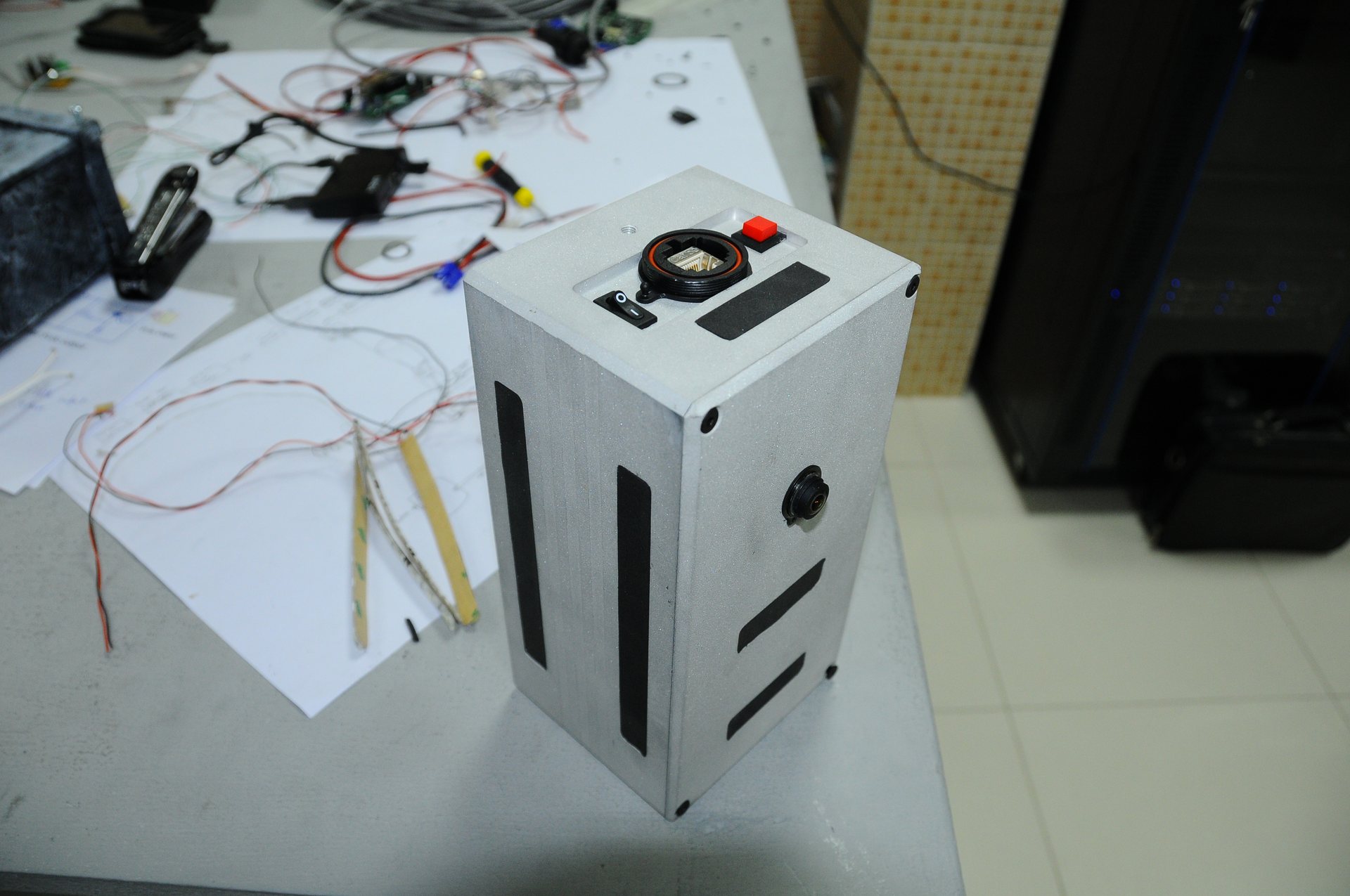
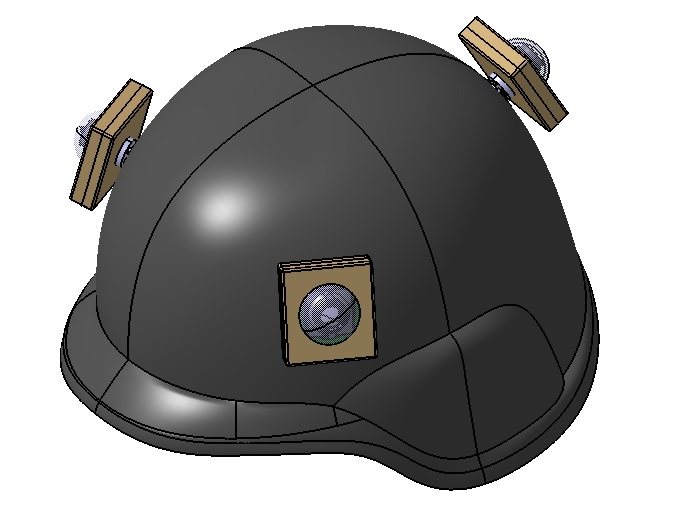
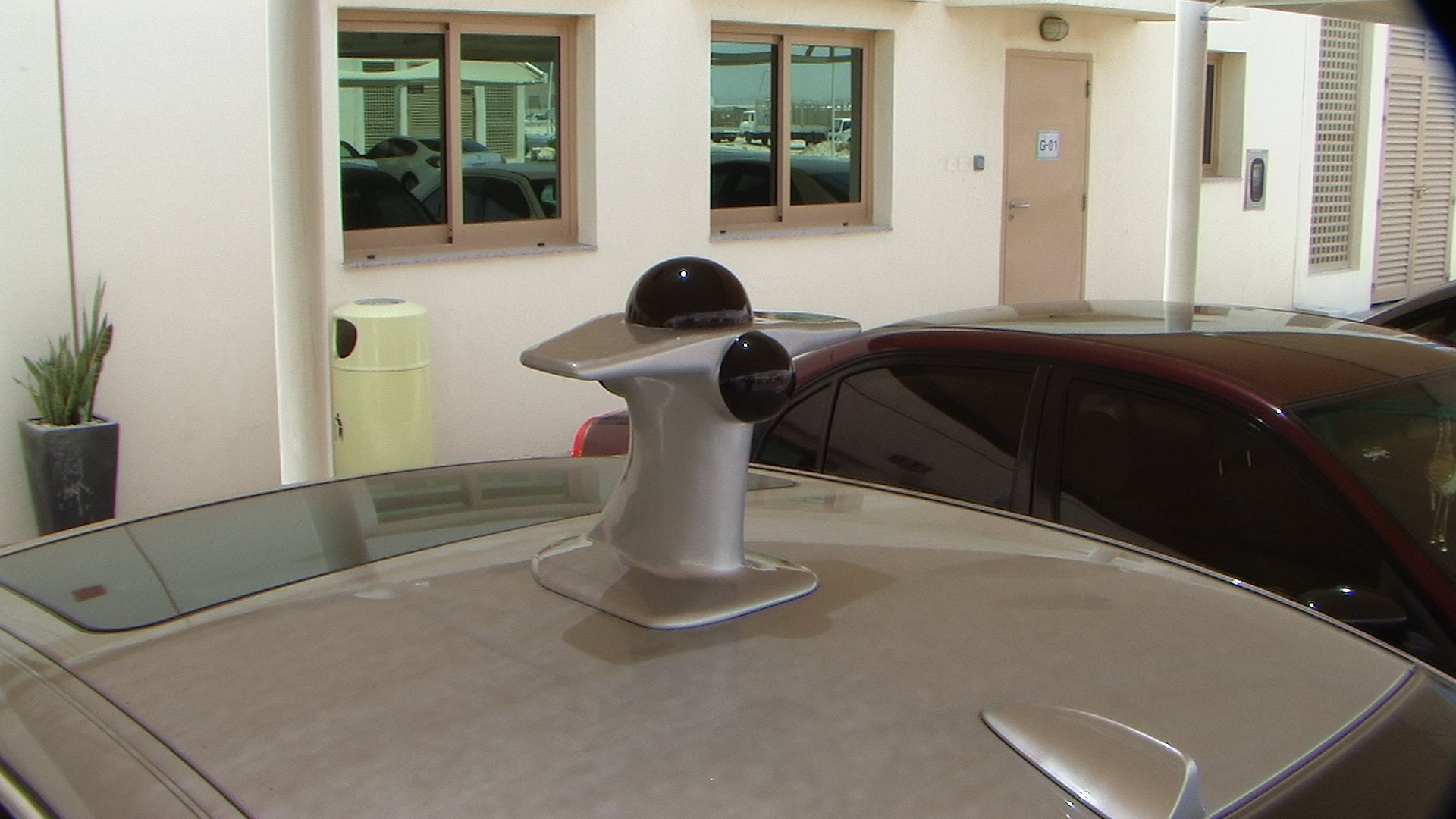
Rugged 360° time-lapse camera.Styx: a cable-controlled surface vehicle to inspect under bridges.Karez: the field case for cave inspection.Karez: the camera unit.Helmet-mounted cameras.A roof-mounted 360° camera for cars.
Law enforcement
On the map with Dubai Police
The H2 established Doo Technologies with law enforcement and led to its involvement with Dubai Police, supporting the Security & Safety Training Programmes of the Dubai Police Academy’s International Centre for Security & Safety, delivered with City & Guilds content and TAVCOM.
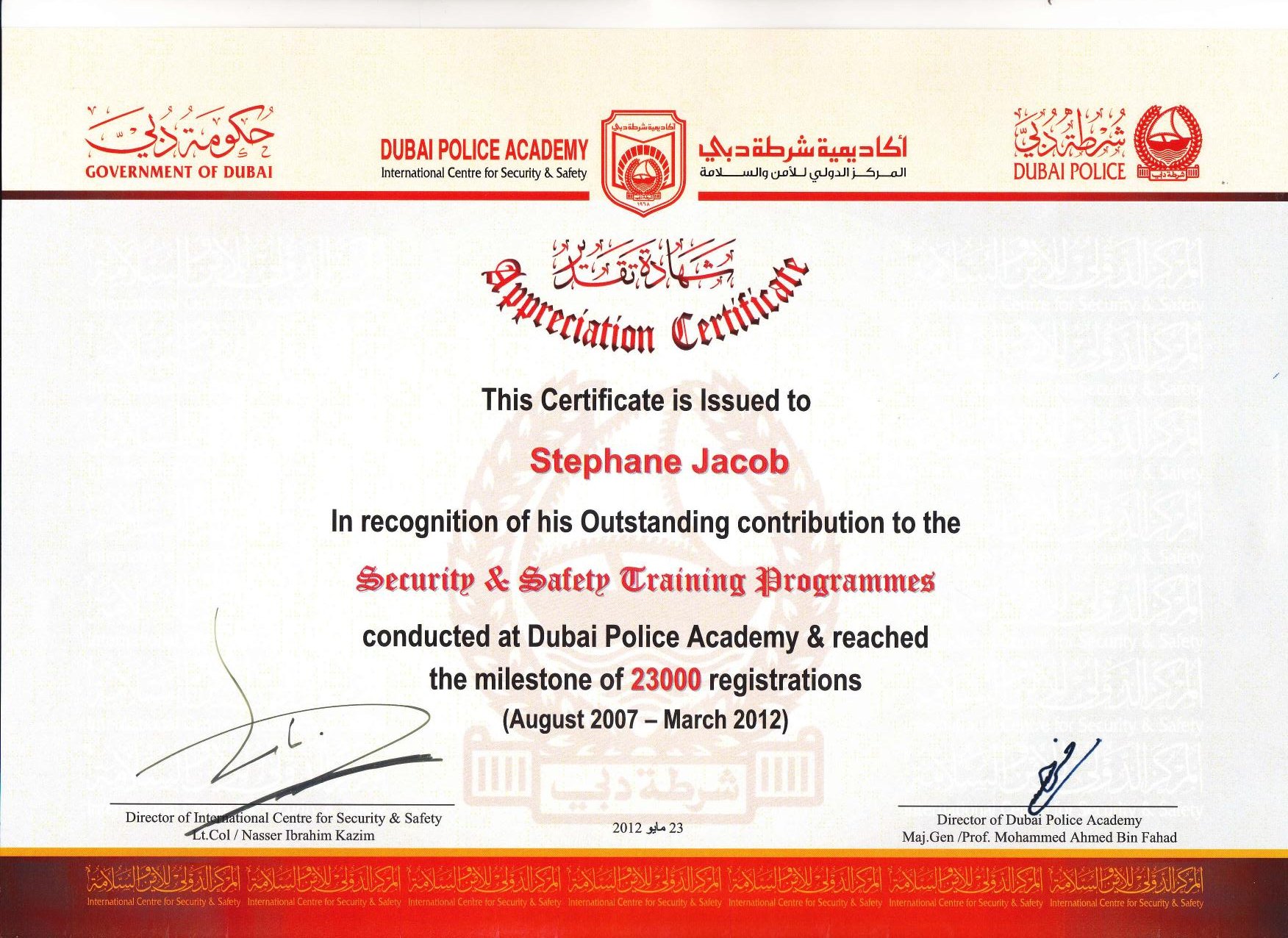
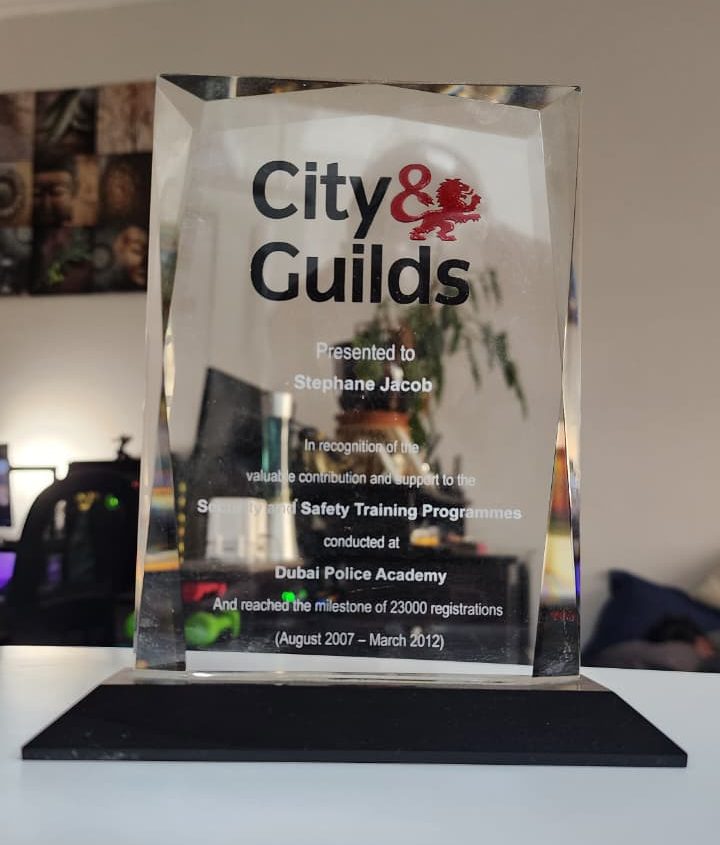
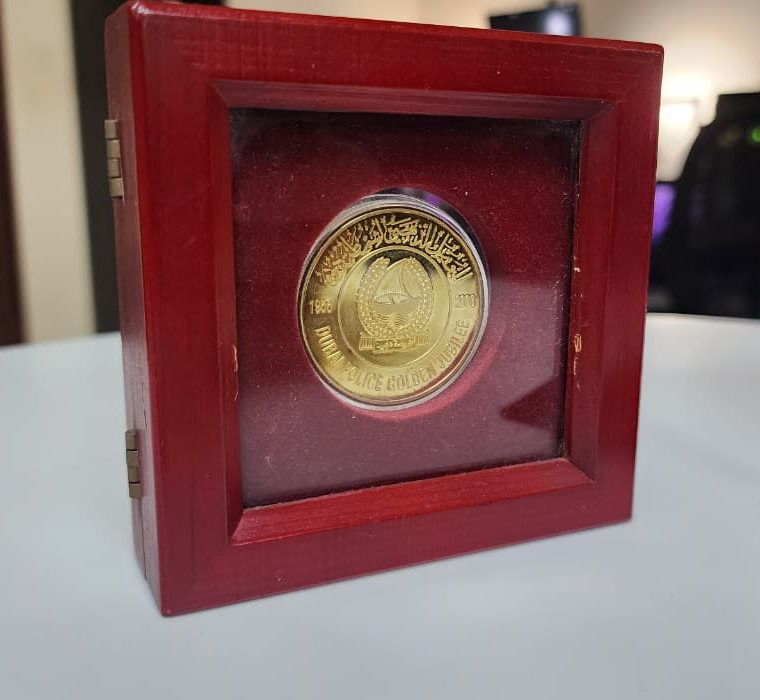
In 2012 this contribution was recognised at the Dubai Police Academy with an Appreciation Certificate, a City & Guilds award and the Dubai Police Golden Jubilee medal, as the programmes passed 23,000 registrations.
Appreciation Certificate, Dubai Police Academy, 23 May 2012.City & Guilds award, Security and Safety Training Programmes, 2012.Dubai Police Golden Jubilee medal.
Then and now
Ahead of the market
Today leading IP camera manufacturers, among them Axis and Mobotix, offer 180° fisheye cameras and pair them with PTZ units: the fisheye for situational awareness, the PTZ for detail. Doo Technologies built and fielded that combination on a vehicle in 2009 and 2010.