
Nuclear Sites on Film.
1999–2000: some 450 360° spheres shot on slide film inside EDF nuclear power plants and CEA research centres, scanned circle by circle, between the Biron CD-ROM and the digital Accor platform.
360° imaging inside nuclear sites, on film
Where digital cameras could not go, film did.
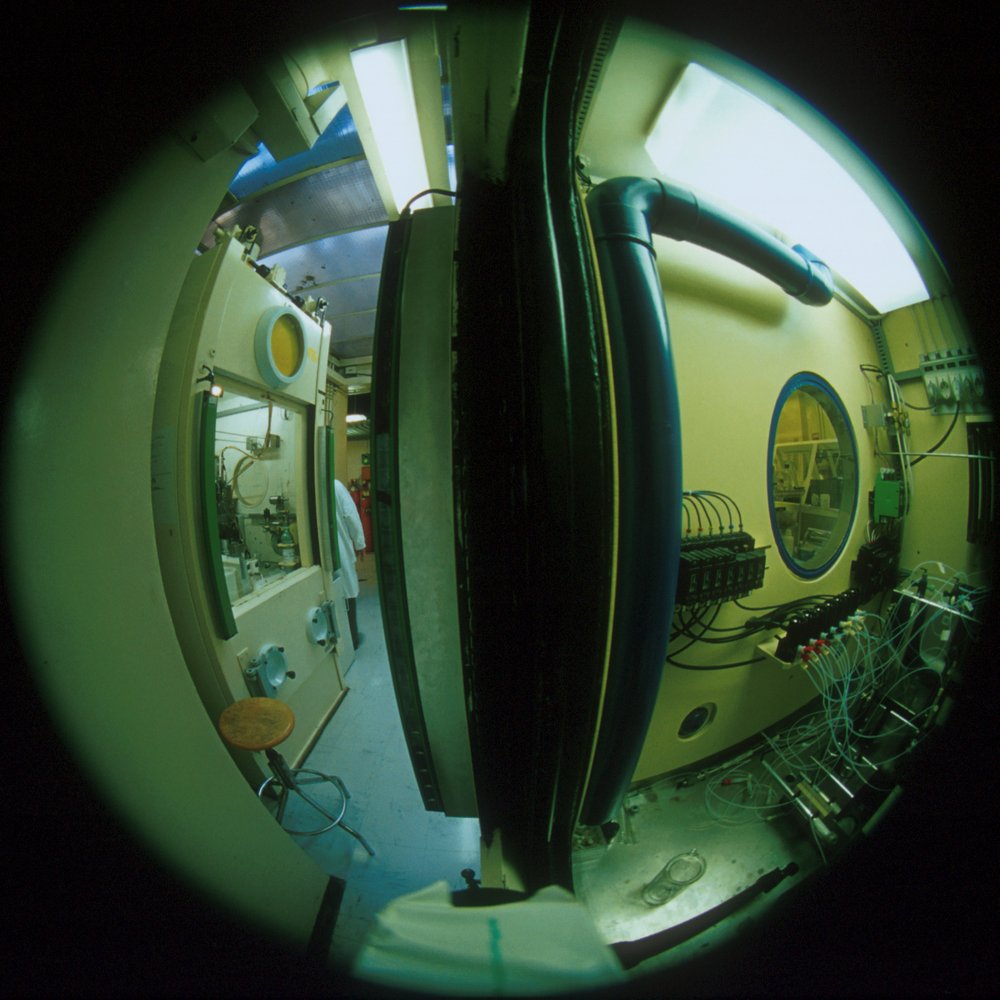
From 1999 to 2000, working for Abstract Interactive in Pessac, Doo Interactive produced some 450 360° spheres inside EDF nuclear power plants and CEA research centres, for image-based maintenance and intervention databases. Every image was shot on slide film, scanned circle by circle and assembled before delivery.
This work sits between the Biron and Lascaux CD-ROMs of 1998–1999 and the fully digital Accor platform of 2000–2001. It is where Doo Interactive’s shooting protocol was hardened for environments where nothing can be left to chance.
Rebuilt in 2026 from the original 1999 and 2000 film scans. Drag to look around.
spheres on film, 1999–2000
rolls of slide film at Civaux alone
spheres across five CEA centres
to scan each fisheye circle
Film by necessity
Digital cameras were available, but not inside a controlled zone. Radiation could damage an image sensor, and any equipment found contaminated on exit must remain on site. Film cameras and a large stock of slide film were the safe choice. Each intervention required access passes, dosimeter films and radiological surveillance; at Civaux, two operators spent five days on site and exposed 56 rolls of film.
From slide to sphere
Each sphere required four fisheye views at 90° intervals, usually bracketed at two or three exposures: eight to twelve circles to scan per sphere, at around two minutes each, before stitching. Across 450 spheres this meant thousands of scans and well over a hundred hours of scanning. Working from mounted slides rather than film strips allowed batch scanning and faster selection. Every image was then reworked in Photoshop, from fisheye to cube faces and then to equirectangular, with the tripod removed: at least ten minutes per image when the shot was right, up to an hour otherwise, on Windows 98 and Windows 2000 workstations without GPUs.
Two circles, one master, one sphere
In a research reactor hall, one fisheye looks down into the reactor pool and the other up at the dome. Assembled, they formed the editable master delivered to the client; in 2026 the same two scans were rebuilt into the interactive sphere above.
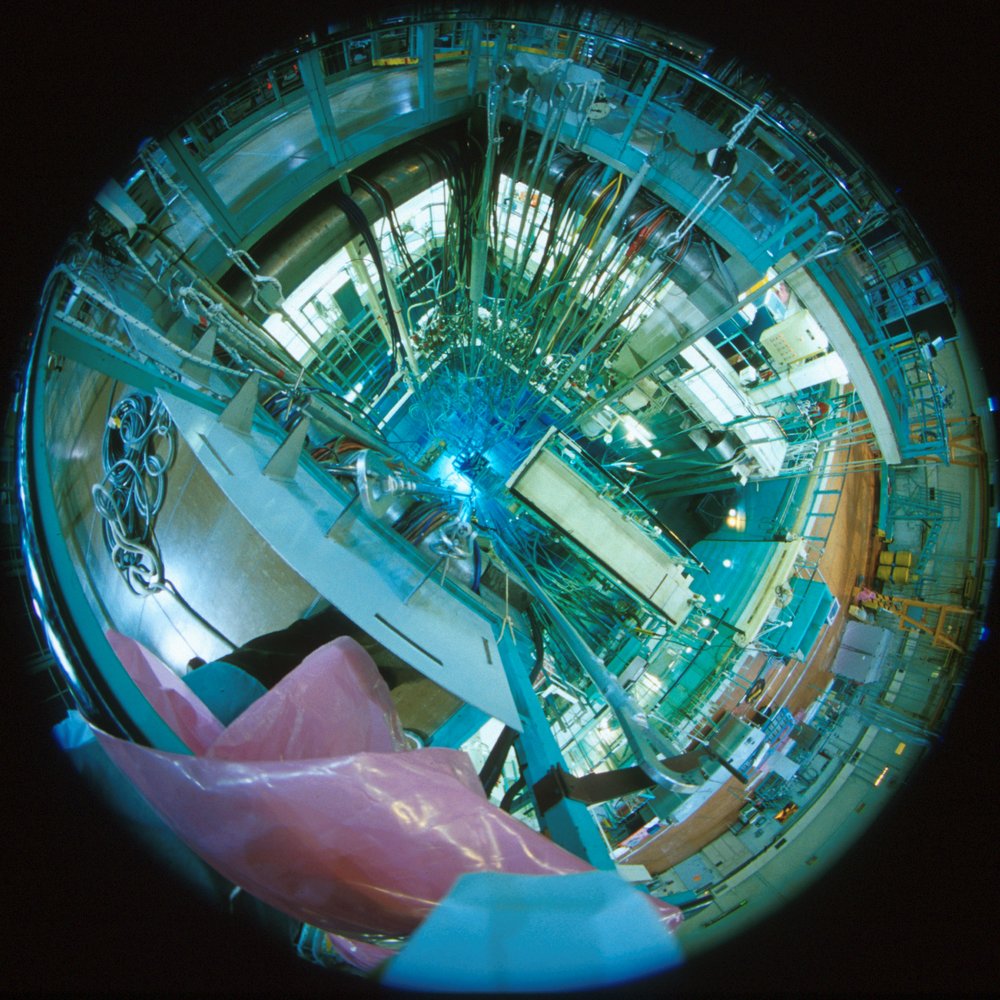
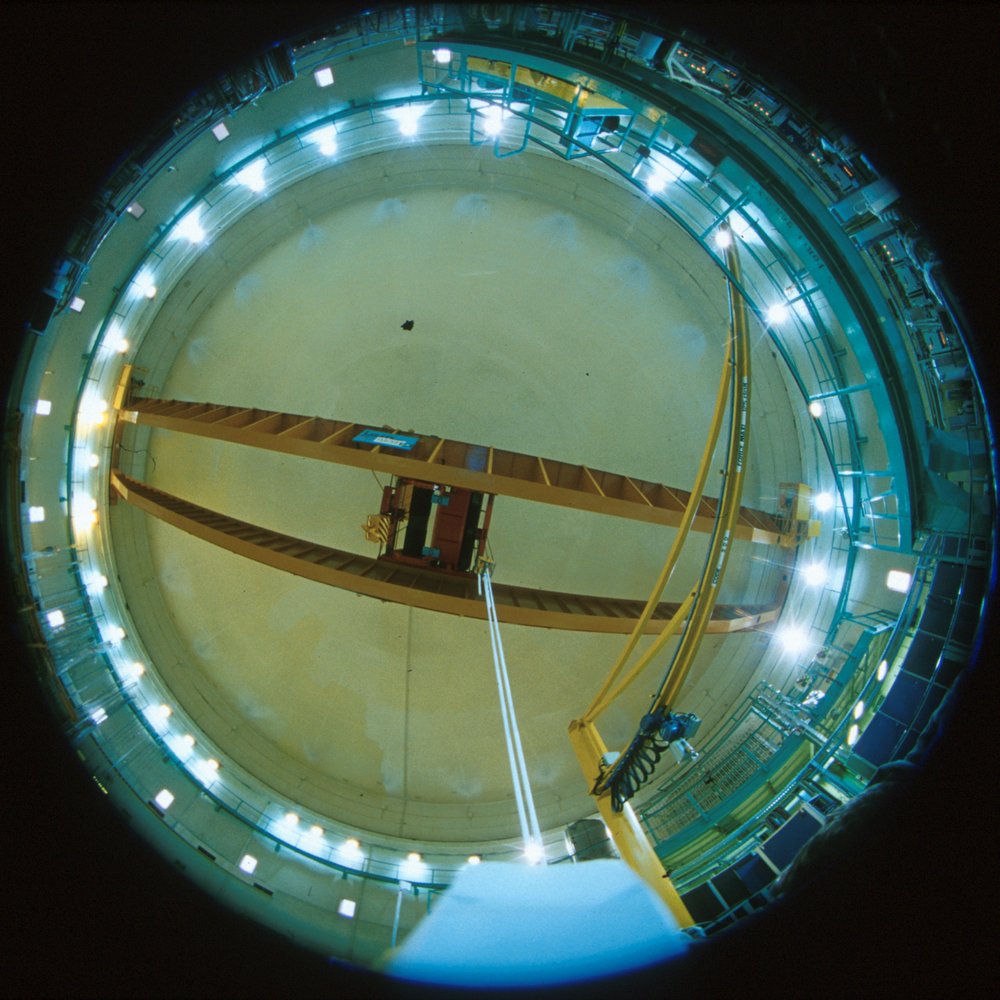
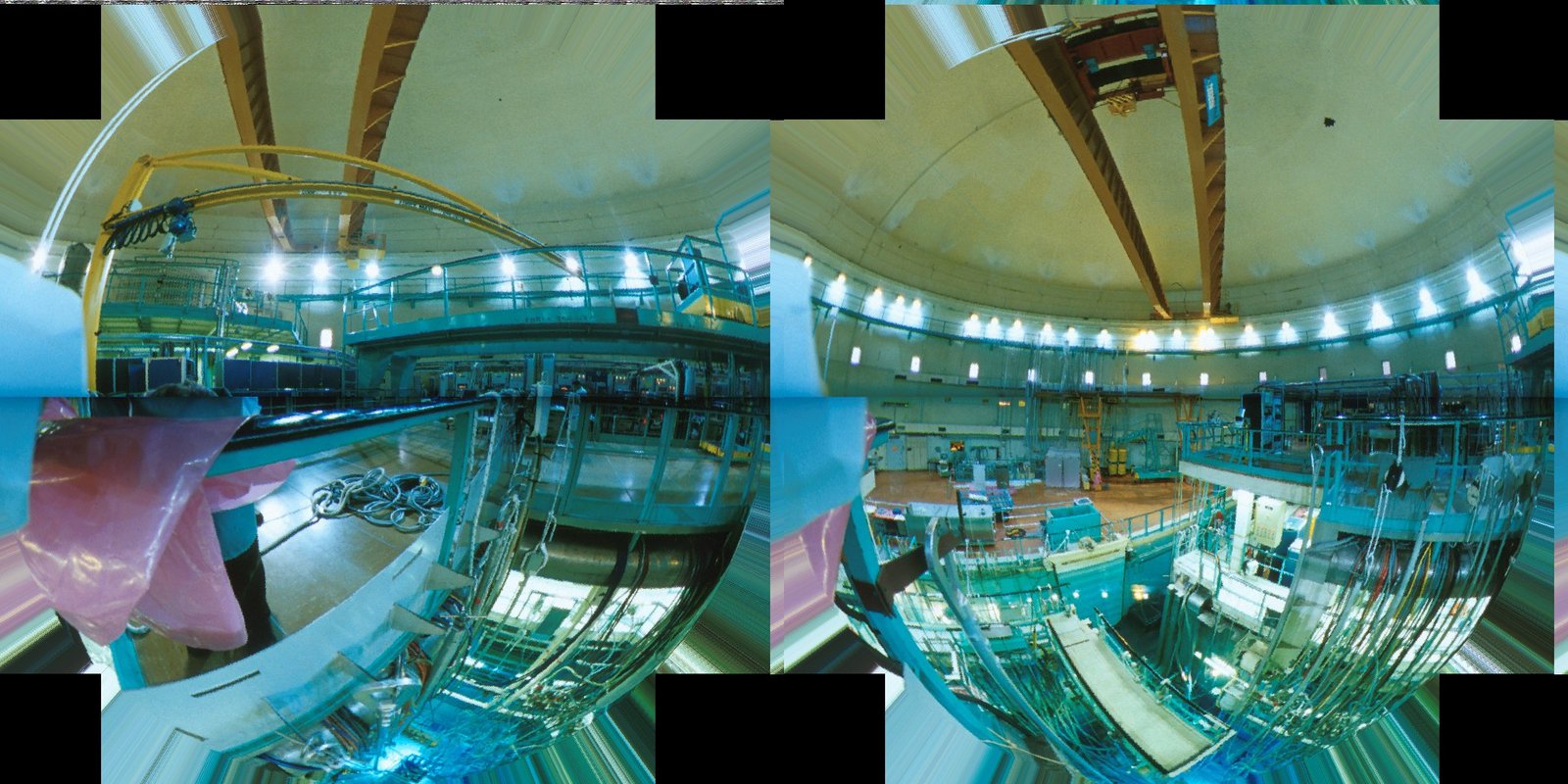
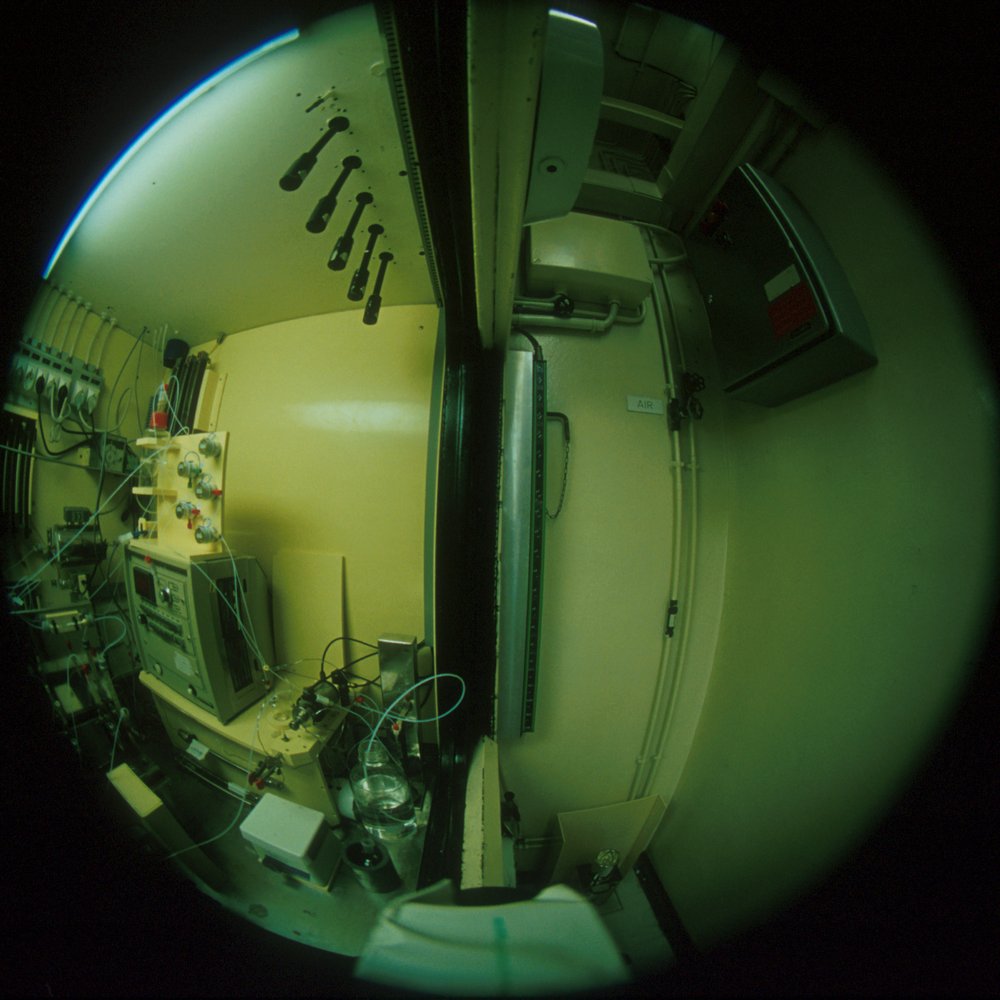
EDF power plants and CEA research centres
The CEA centres were delivered in December 1999 on ten CD-ROMs; Civaux and GIE INTRA followed in 2000. GIE INTRA, the robotic intervention group of the French nuclear industry, used its database for maintenance and emergency robot operations.